
I found an old sketchbook.
On the first page, in my own handwriting:
Hans Heiner Buhr. 16 April 1992.
I had completely forgotten it existed.
Amsterdam, Spring 1992
I was 26 years old, studying at the Gerrit Rietveld Academie in Amsterdam. I had come from Berlin by rideshare — the sticker is still inside, Alexanderplatz, £55. The Wall had fallen two and a half years earlier. I was from East Berlin, had studied Russian and art education in Dresden, had painted in an army barracks while seven comrades watched. And now I was in Amsterdam.
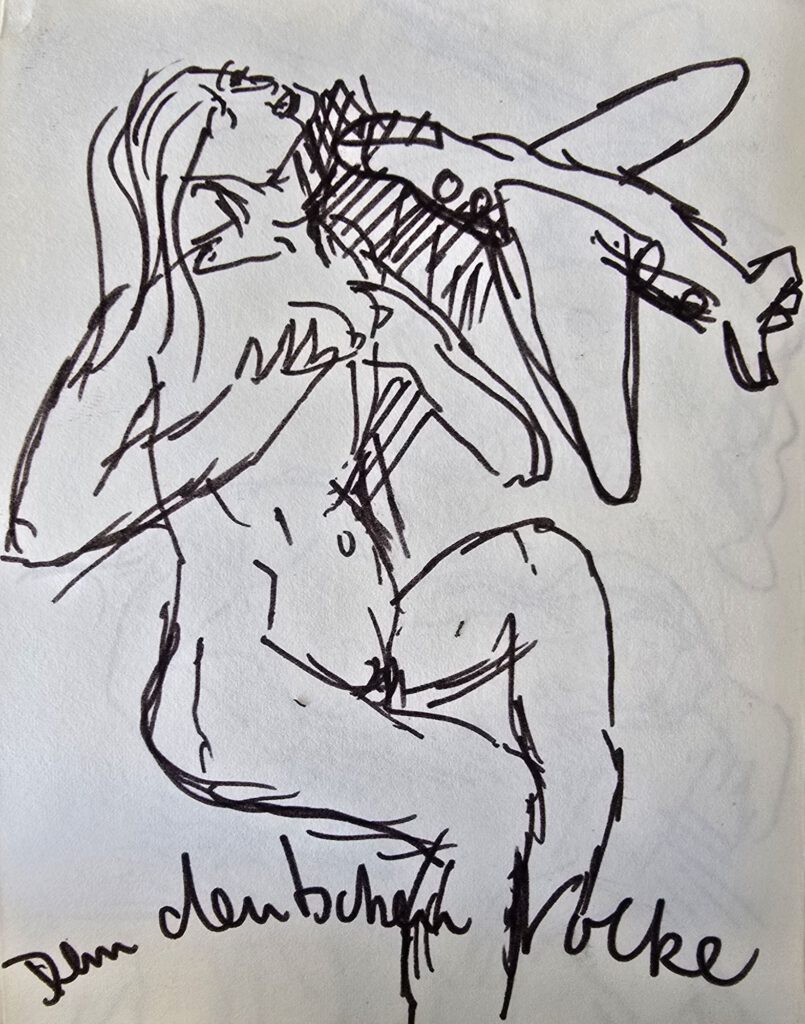
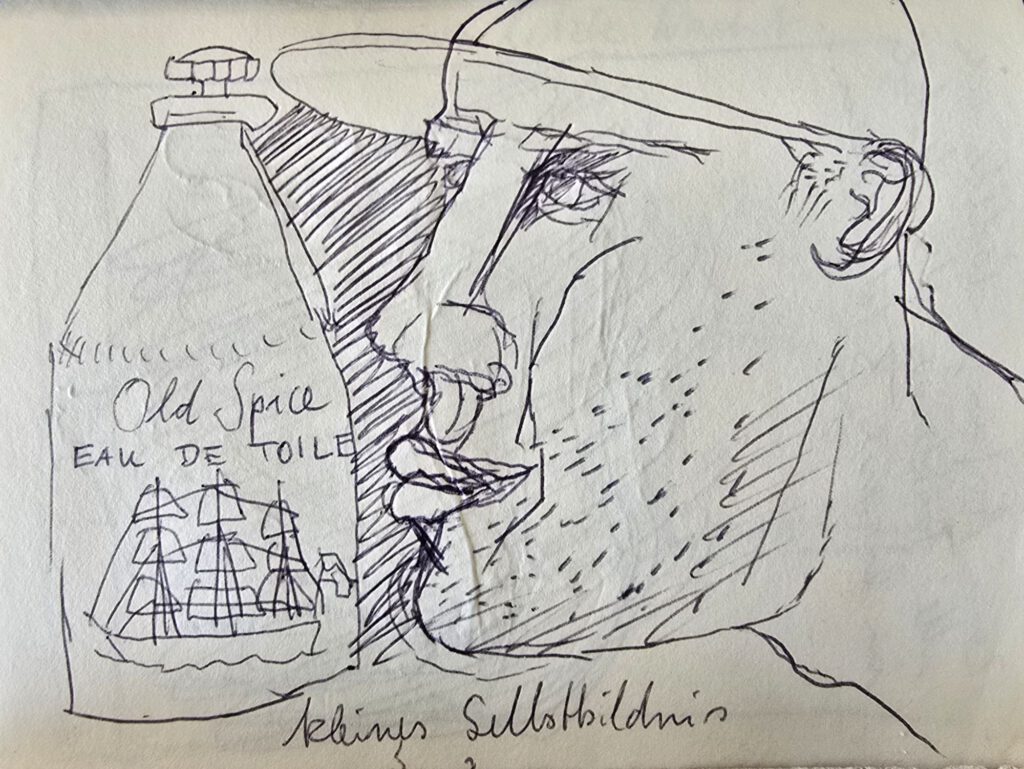
In 1992 there were no mobile phones. Sketchbooks were my normal way of capturing ideas, thoughts, observations — as a drawing or a note, quickly, directly, without filter. Those who know me today as a crypto artist and NFT collector may not see that behind me there is a completely different, fully analogue history. This notebook is part of it.
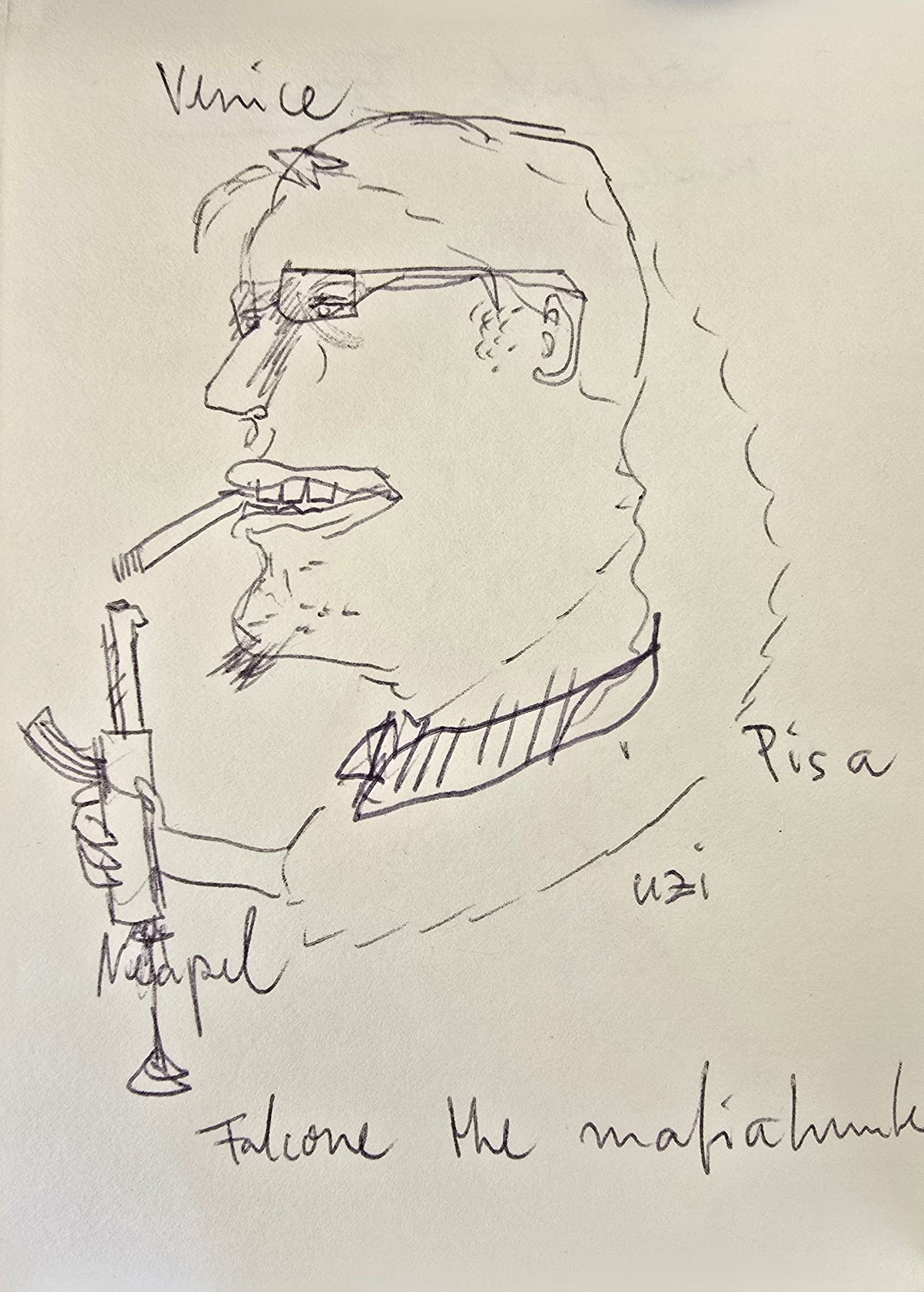
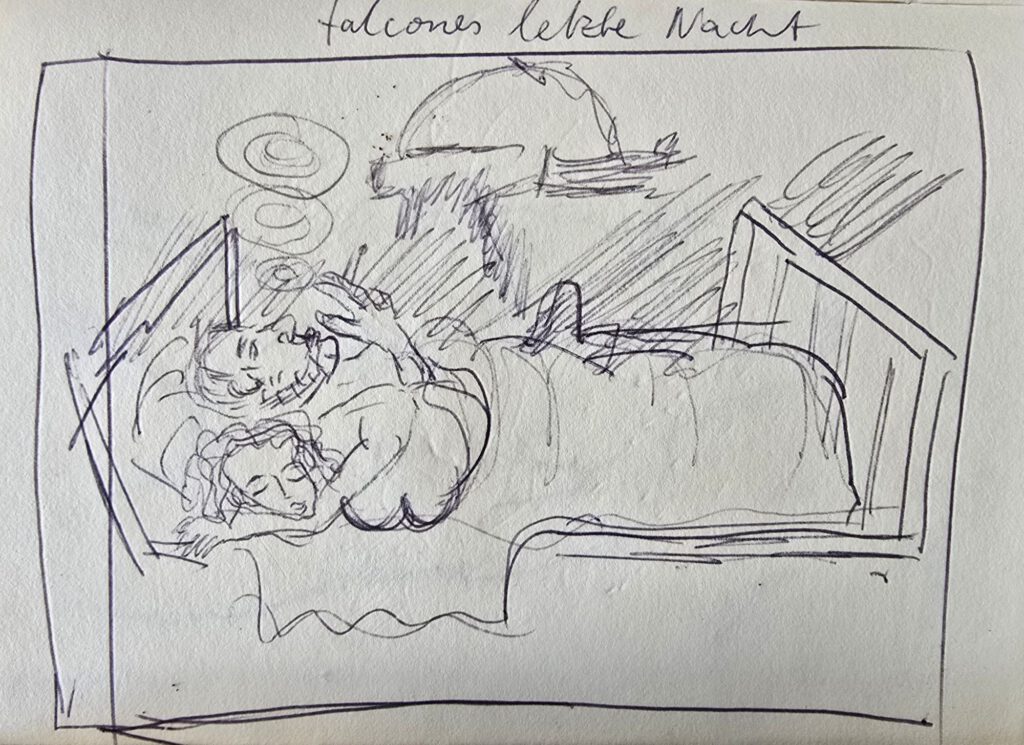
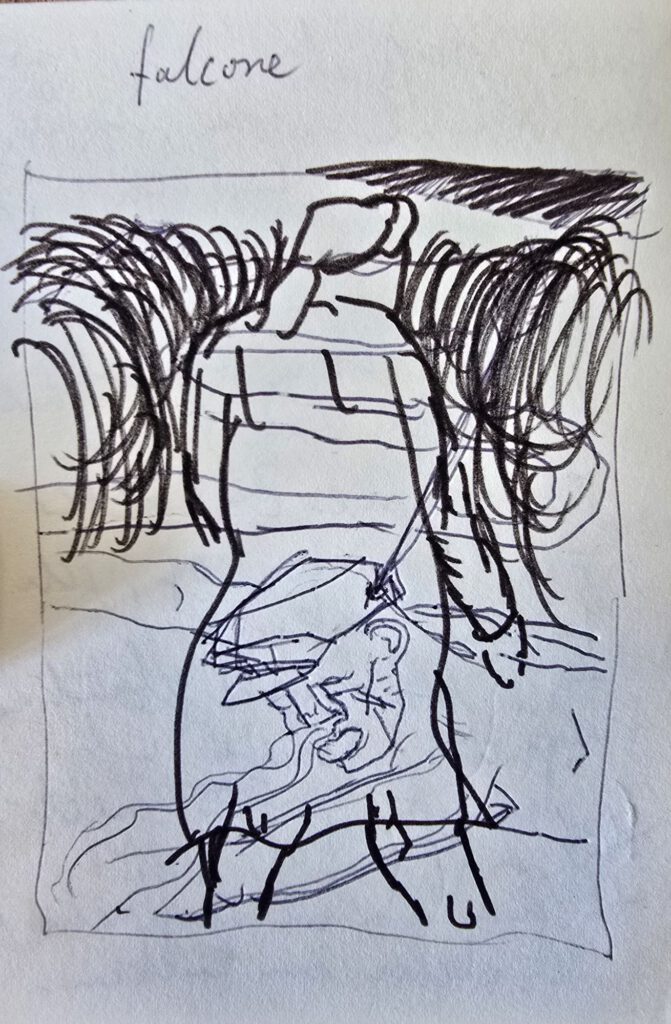
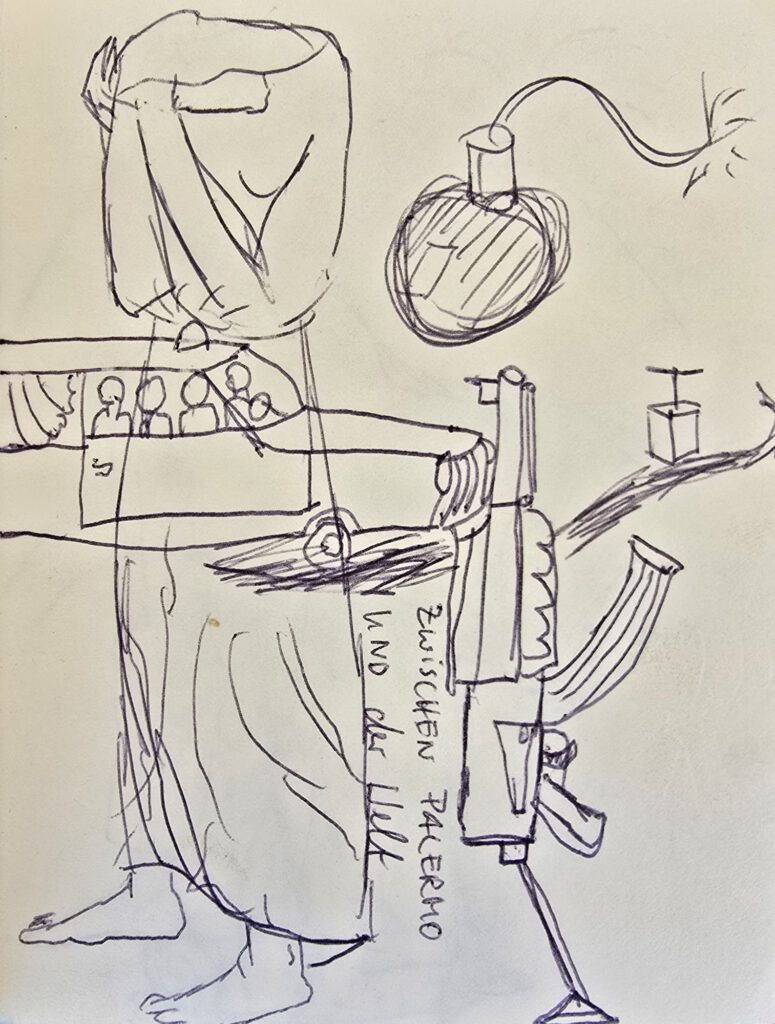
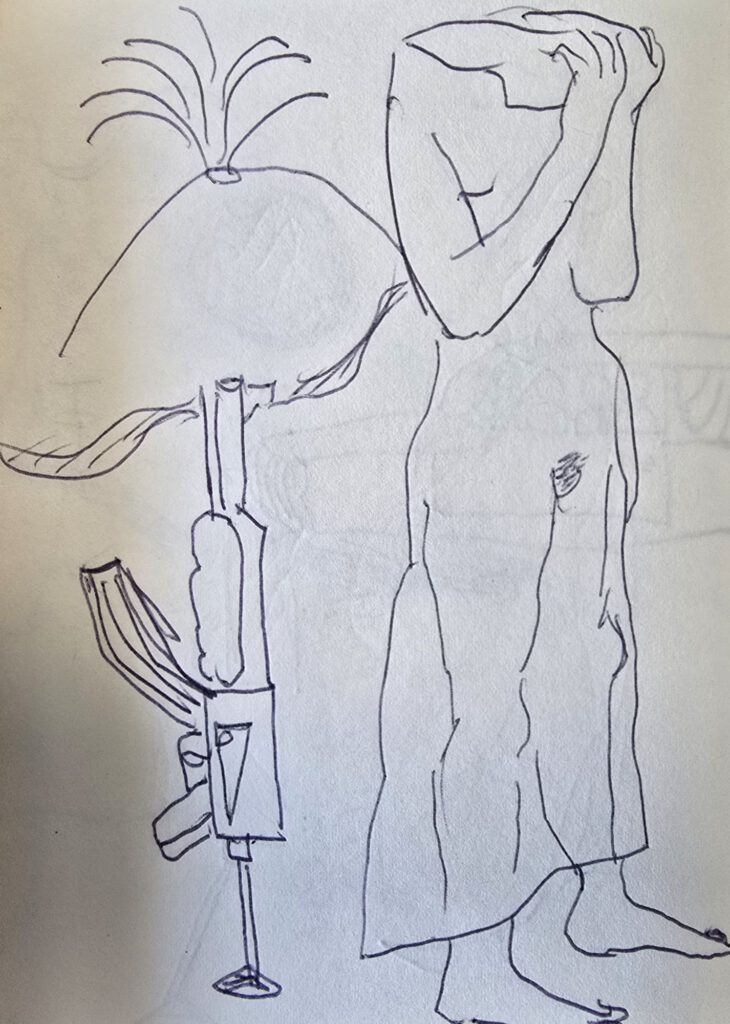
The world was in motion. In May 1992, Giovanni Falcone was murdered — the Sicilian anti-mafia judge, blown up on the motorway near Palermo. It hit me deeply. In 1992 I was in Italy for the first time — on a Rietveld Academie excursion to the north: Verona, Padua, Mantua, Venice. Falcone died in the south, in the same year. Only three years ago did I visit Sicily for the first time. The monument to Falcone in Palermo made a deep impression on me. Some circles close slowly.
I drew everything immediately. That was how I understood the world.
Rembrandtplein, at night
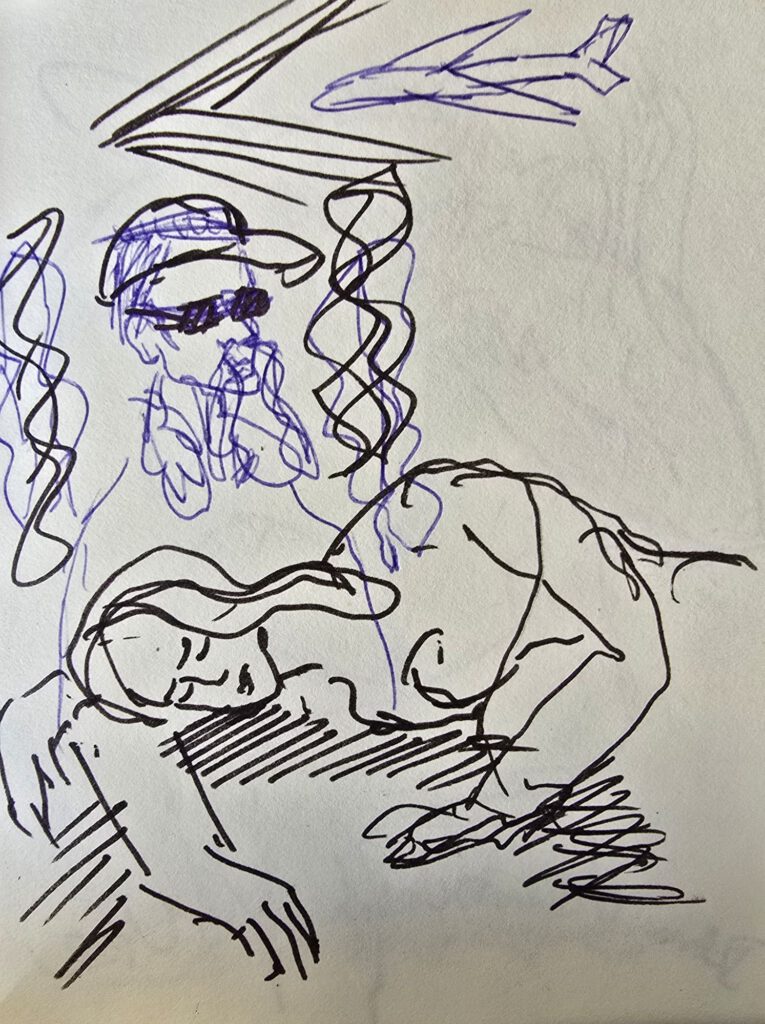
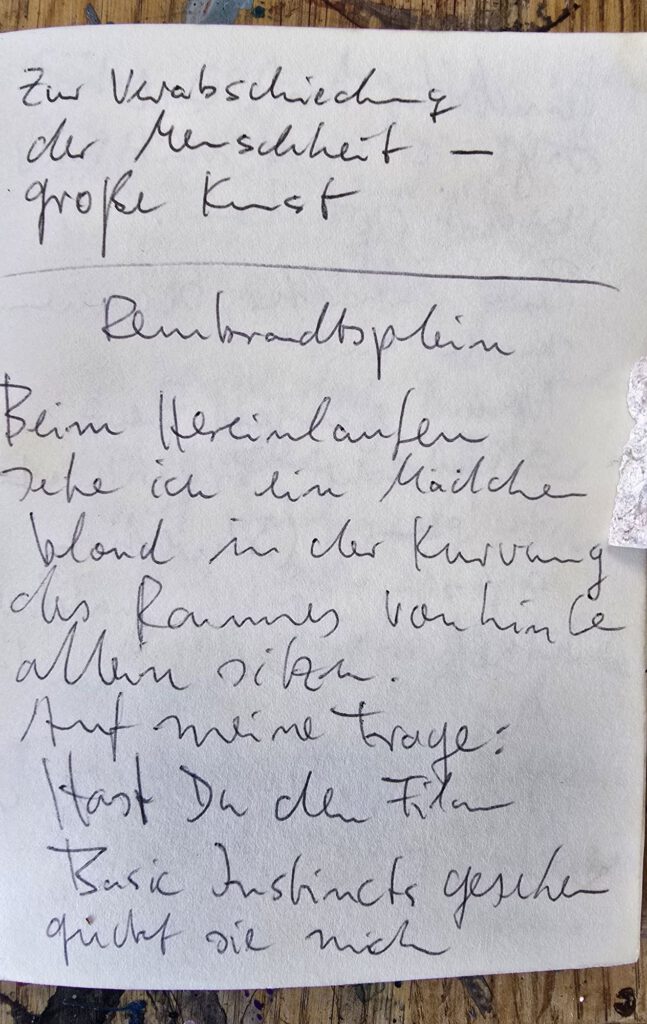
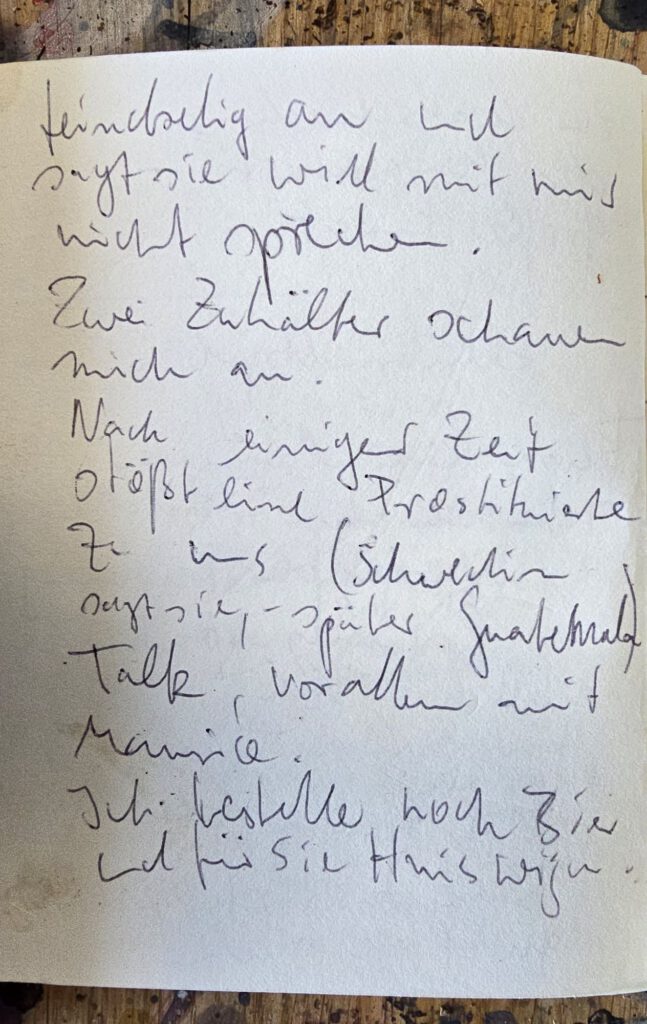
Sometime that spring — I no longer remember exactly when — I was walking home across the Rembrandtplein at night. A girl, blonde, was sitting alone in the curve of the room, seen from behind. I asked her: “Have you seen the film Basic Instinct?” She looked at me with hostility and said she didn’t want to speak with me. Two pimps watched me.
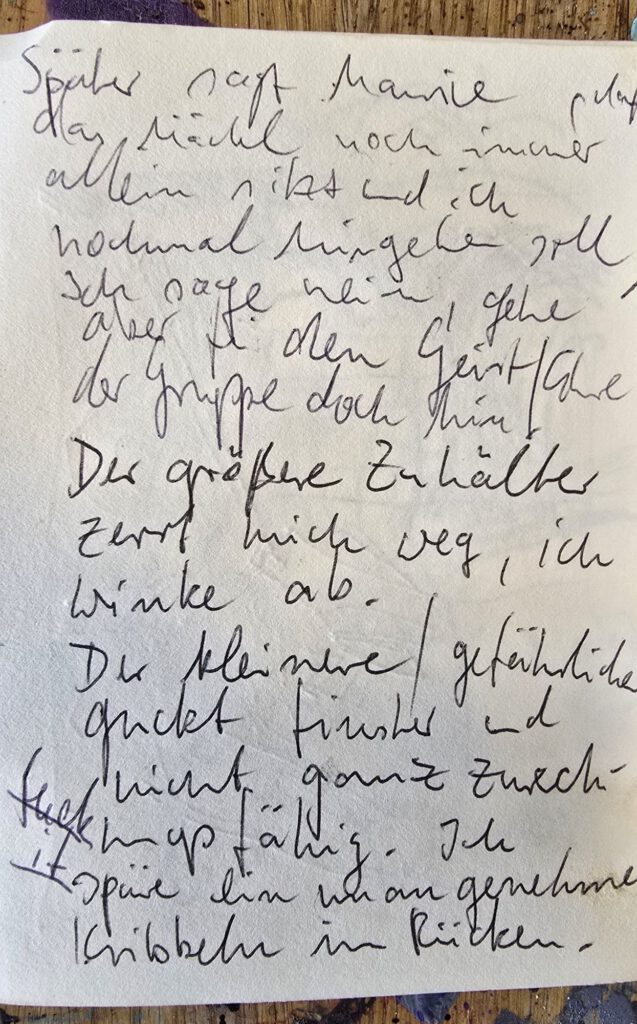
After a while a woman joined us — Swedish, she said, it later turned out she was Guatemalan. Conversation, mostly with Maurice. I ordered another beer and for her a huiswijn — house wine. Later Maurice told me the girl was still sitting alone and I should go over again. I said no. He went anyway. The bigger pimp pulled me away, I waved him off. The smaller one — more dangerous, not quite right in the head — stared darkly. I felt an unpleasant tingling in my back.
I wrote this down the same night. Illegibly, in this notebook. Then forgot it. For 33 years.
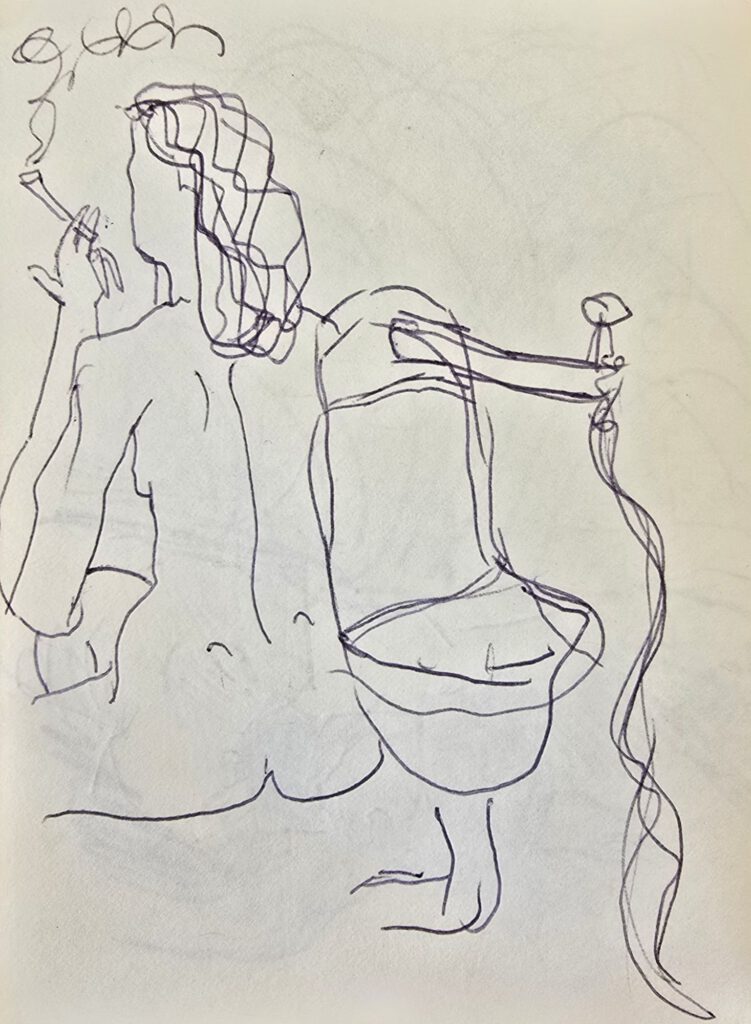
The sketchbook also contains several drawings of Petra — a Dutch woman, one year above me in the Fashion Department at the Rietveld. She was loosely part of the Seymour Likely Lounge crowd. I no longer remember her last name. After Amsterdam I never heard from her again.
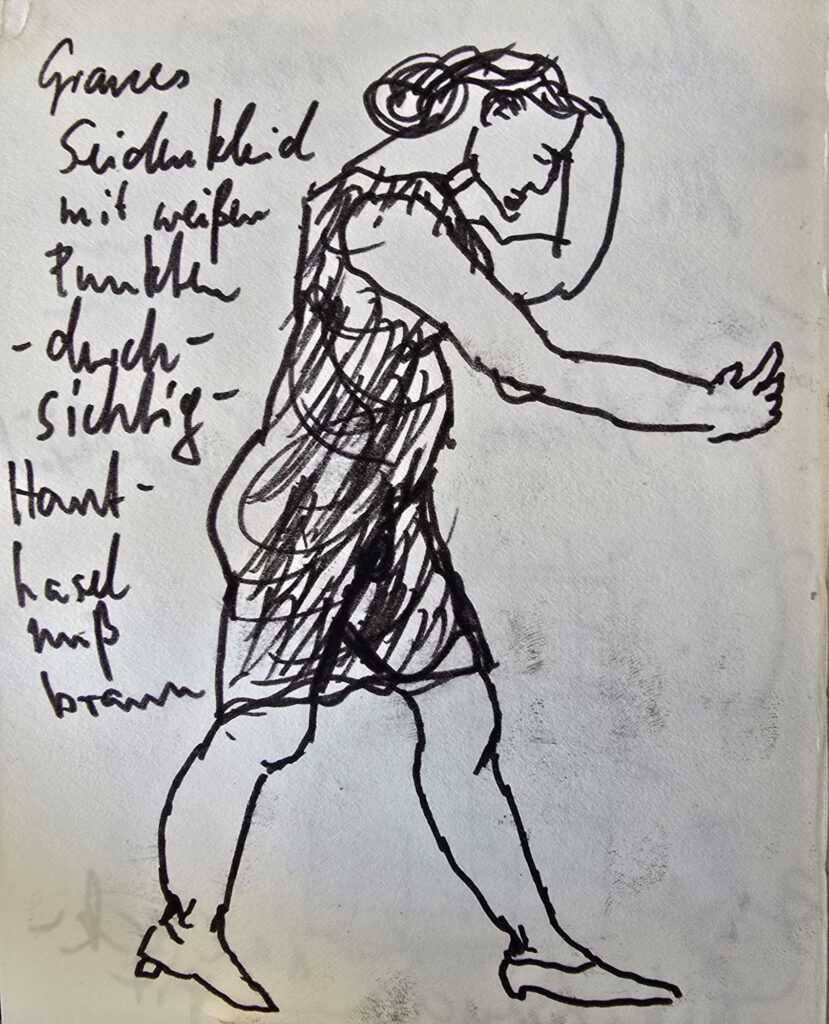
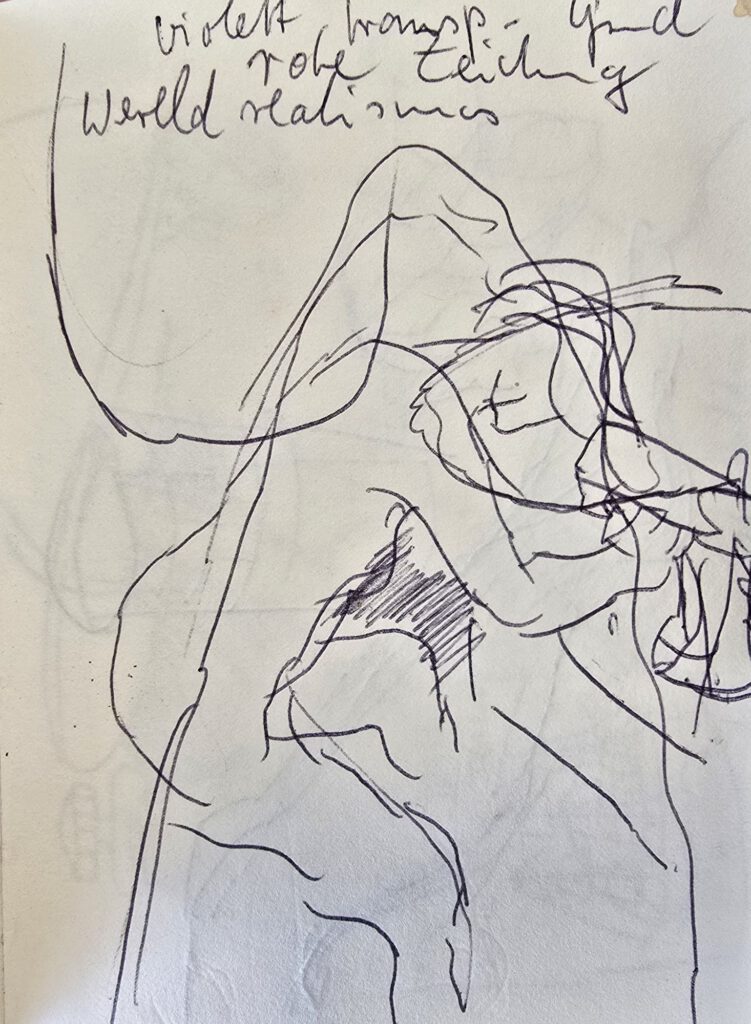
What else the book contains
The Volksbühne in Berlin — with an aeroplane flying over it. The East German symbol on the gable, the water in front. I had just left Berlin, but Berlin was still inside me. A T-shirt design: “Tekkno-Gen. Berlin Amsterdam N.Y. Wolf Apfelbaum. The Bobby-Peru-Party.” — In 1992 techno was still young, Amsterdam one of its centres. We felt it.
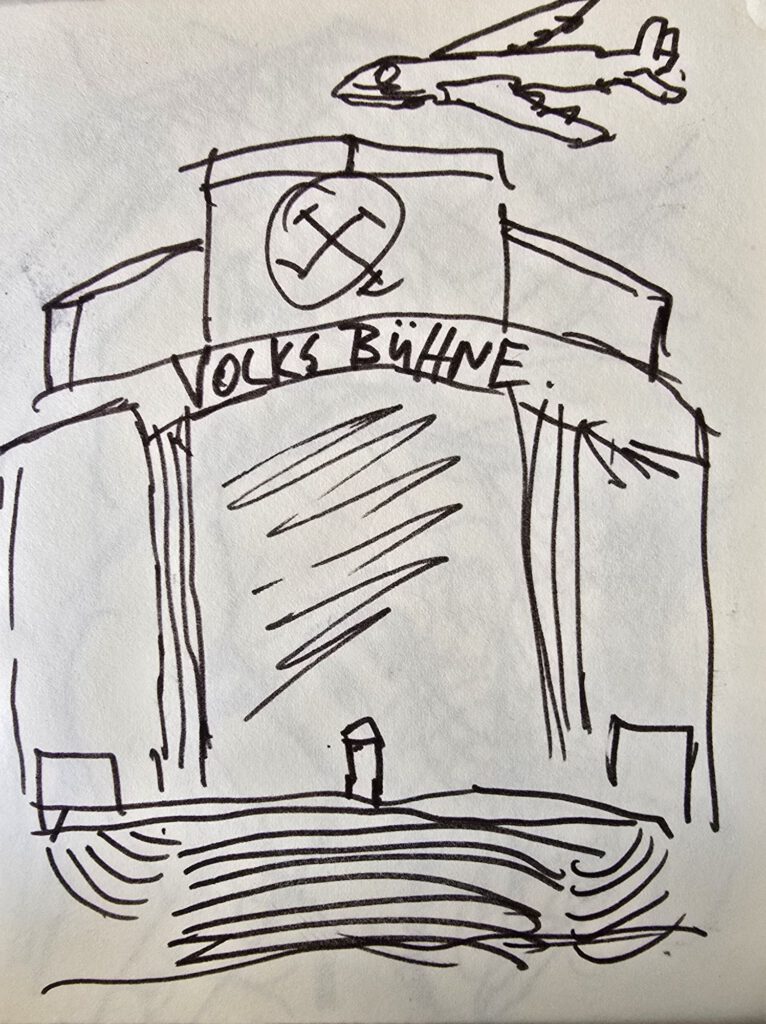
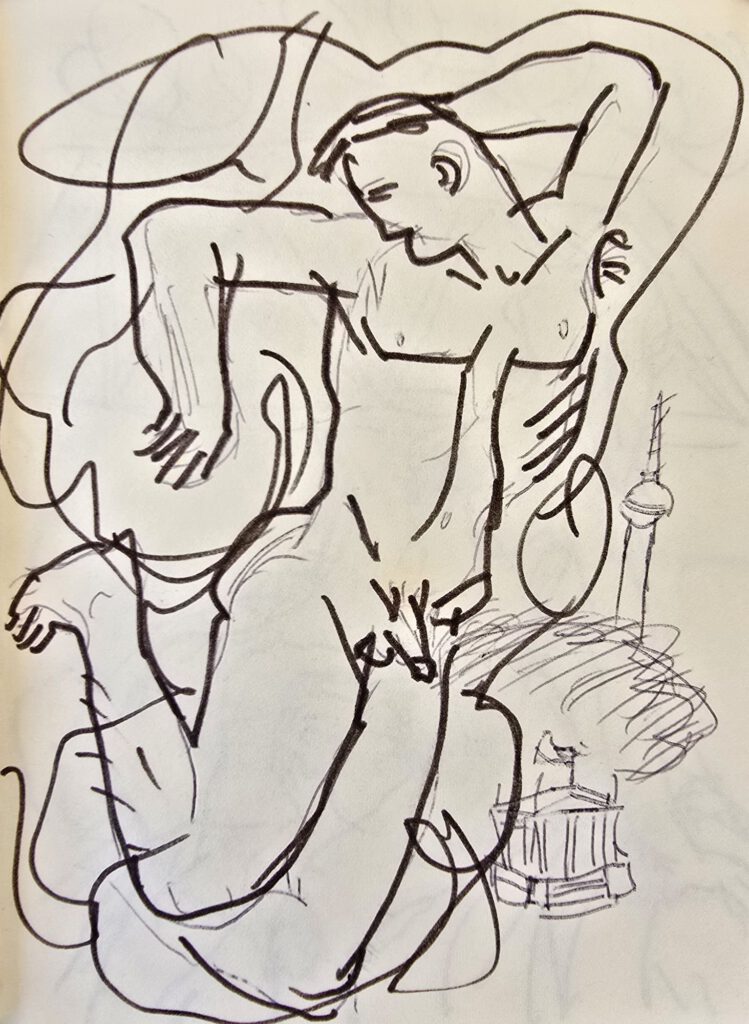
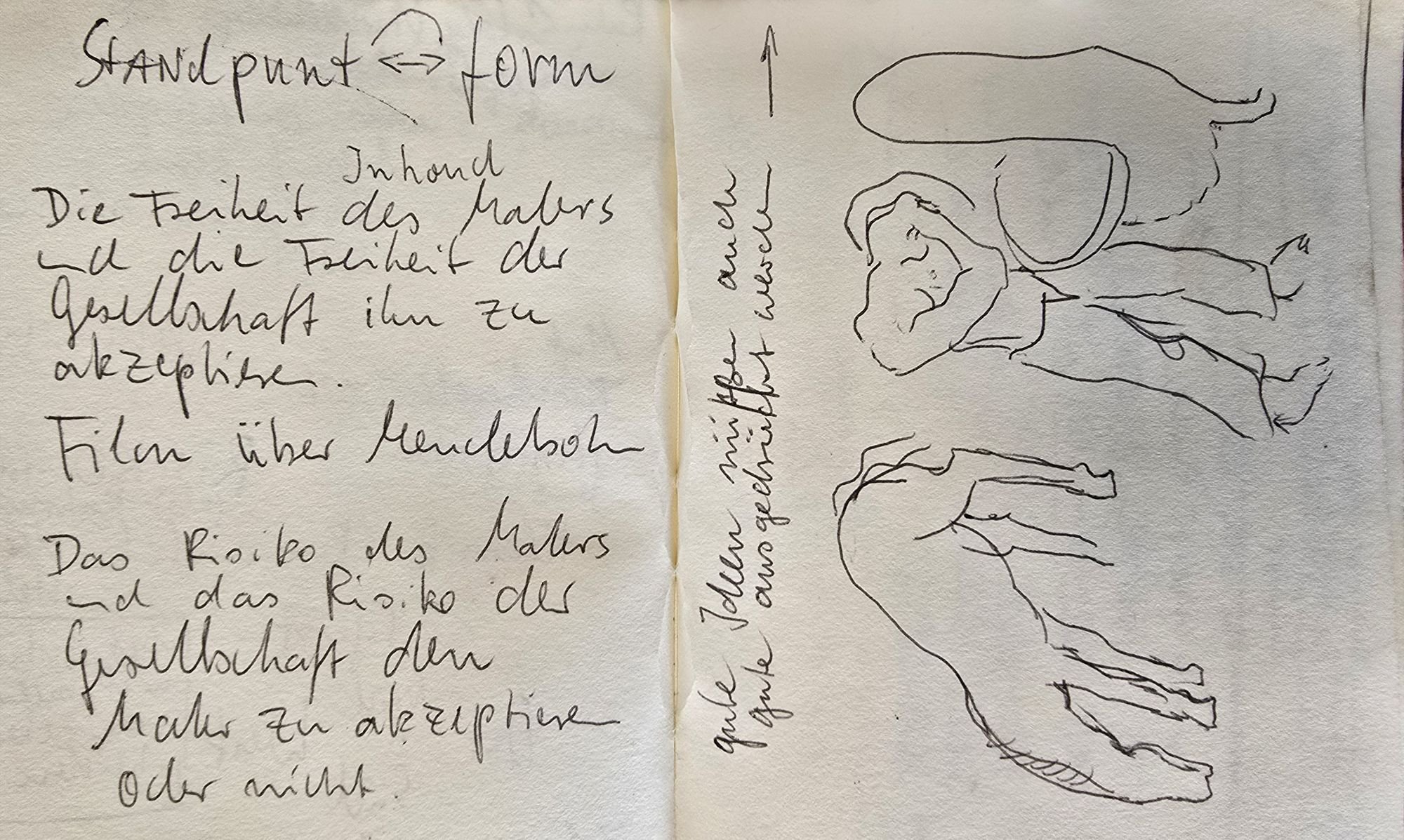
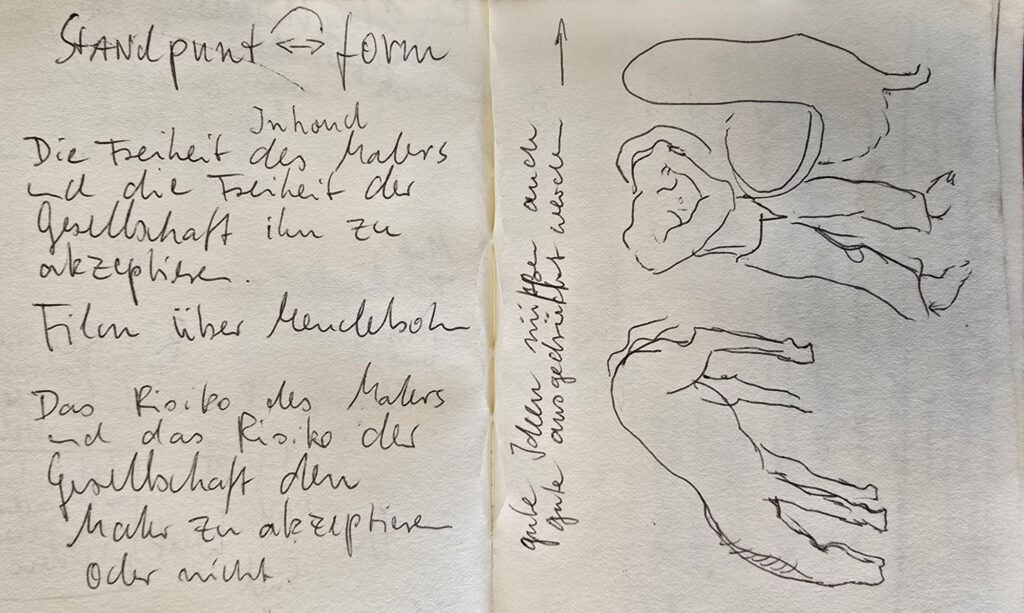
And a theoretical note, across a double page: “Standpoint ↔ Form / Content. The freedom of the painter and the freedom of society to accept him. The risk of the painter and the risk of society to accept the painter — or not.” — I was 26 and already formulating my own philosophy of art. The same question still preoccupies me today.
Why I’m showing this
I have lived in Tbilisi, Georgia since 1996. I am a painter, crypto artist, tour operator. I was there when the Wall fell, when Falcone died, when techno was born, when NFTs began. I was often in the right place at the right time — without knowing it.
This notebook is a document of that time. From a 26-year-old East Berliner who was just discovering the world, with a ballpoint pen and bad handwriting.
Heiner Buhr — Painter & Crypto Artist, Tbilisi
🌐 Auch verfügbar auf: Deutsch
Newsletter
New paintings. New texts. New places.
Directly to your inbox.