
The Story of a Painting from Dresden, 1990
A few days ago, the young Georgian curator Tsotne Tserava showed me an image on his phone. Tsotne is Deputy Director of Atinati in Tbilisi, and he seems to follow very closely where art connected to Georgia or Tbilisi appears internationally. Almost casually, he told me that he had recently seen a painting of mine in an auction.
At first I said that this could hardly be true.
Then he showed me the page on Drouot.
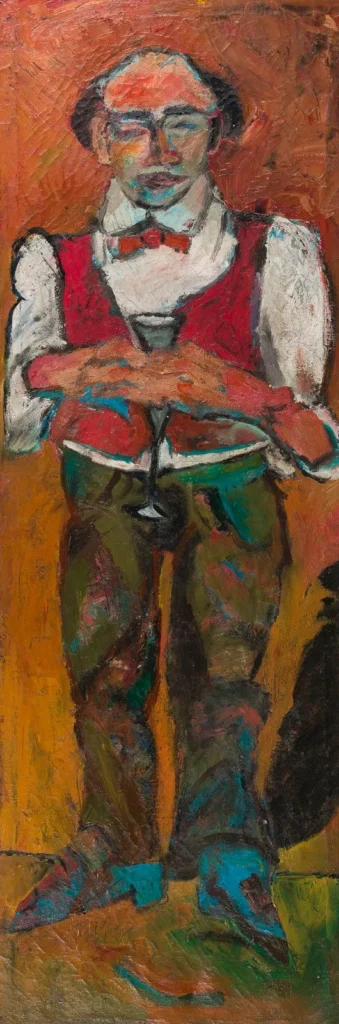
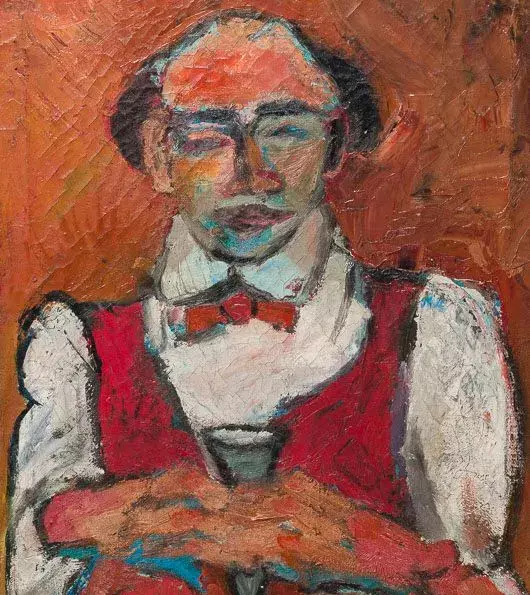
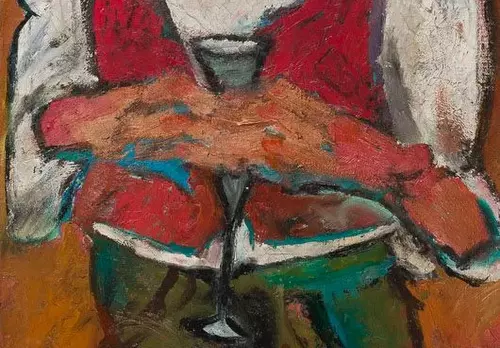
And there it was: a narrow, vertical painting, oil on canvas, a standing figure with a red vest, dark trousers, a bow tie, folded hands and a face somewhere between mask, fatigue, wit and self-assertion. I recognized it immediately, although I had not seen the painting for decades.
My first thought was simply:
Oh, my painting.
Then came the second thought:
That is Meir.
The auction house had listed the work as “MÜR” and dated it to 1980. I understood immediately what had happened. My handwriting on the back must have been misread. The title is not “MÜR”, but Meir. And the painting was not made in 1980, but in 1990.
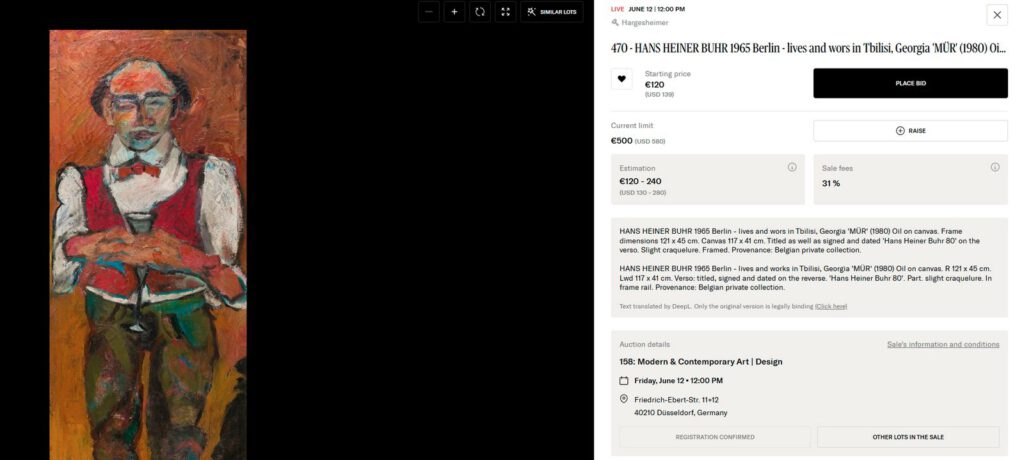
According to the auction listing, the canvas measures 117 × 41 cm, with frame 121 × 45 cm. Oil on canvas. A narrow picture, almost like a fragment. But for me, this fragment suddenly opened up an entire period of time.
Because this painting is not just any early work. It was the central panel of a triptych. It was painted in Dresden in 1990, in an attic apartment under the roof at Otto-Buchwitz-Straße 24, where I lived at the time with Alexander Holschke. I painted it in two or three days, together with two further paintings: Meir Mendelssohn’s two daughters, each with one of their white Polish sheepdogs. These dogs had long hair falling deep into their faces, almost covering their eyes.
The girls in the side panels were partly covered by the dogs. I remember a slightly expressive atmosphere, perhaps blue dresses, though I am no longer completely sure.
I have no photographs of the side panels. Only memories.
The rediscovered painting shows Meir Mendelssohn.
As far as I know, it may be the only painted portrait of him.
Dresden, Autumn 1989
I met Meir in the autumn of 1989 through the artist and gallerist Holger John. The place was the Planwirtschaft, one of the new scene bars in Dresden. At that time, three or four such places suddenly appeared and were immediately packed: loud, chaotic, overcrowded, full of conversations, alcohol, women, smoke, hopes, rumors and plans. The Bronx was one of them too, and also the 100.
The name Planwirtschaft — planned economy — was almost too perfect for that moment. Outside, the real planned economy was collapsing; inside, people were drinking, flirting, arguing and discussing the Wende, the political turn of 1989. Everything was open. Nobody knew what would come next. But everyone felt that something had happened that could no longer be reversed.
Into this atmosphere came Meir.
He was an Israeli-German businessman from Düsseldorf: spontaneous, funny, curious, loud, open, sometimes mad, always at the center of attention. For our standards at the time, he had a lot of money, and he moved through the East like a shark in a pond of fried fish. That sounds harsh, but it describes the situation quite well. Many of us were young, hungry, curious, insecure, poor. He came from the West. He knew business, cars, money, appearance, clothes, restaurants, negotiations.
He knew how to occupy a room.
At the same time, he was not simply a businessman. He had something magnetic. One could almost say he possessed magical powers. He attracted people. He was generous when he wanted to be and threw money around. He talked, planned, negotiated, promised, invented. In one moment he could appear as a patron, in the next as a trickster, then again as a clown, a swindler, an adventurer or a disappointed artist.
He was all of these things at once.
Breakfast at Meir’s
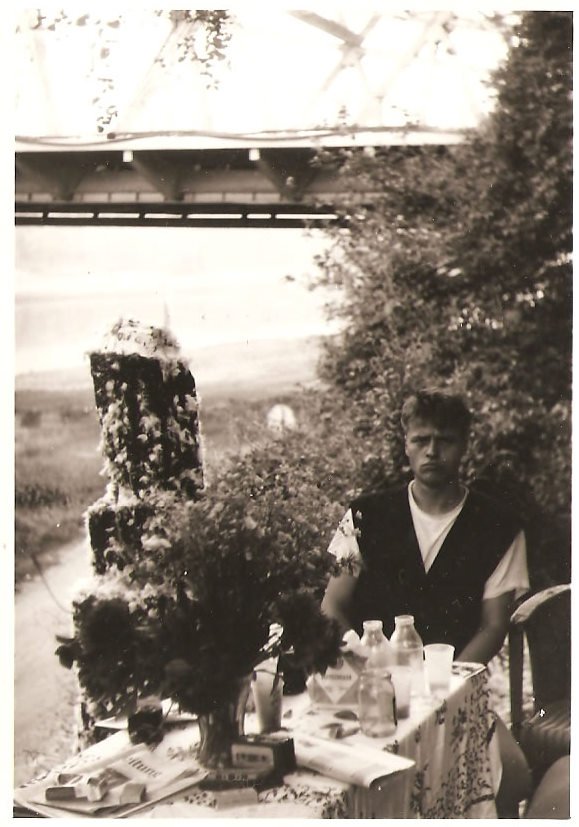
At that time, Meir lived in a large, bourgeois apartment at Bautzner Straße 17. There he regularly held long breakfasts at a large round table. There was sparkling wine, wine, bread rolls, expensive ham, cheese, fruit, pistachios and other things that were anything but self-evident for young artists and students in Dresden then. Whoever was hungry and belonged to his circle could come.
Usually at least five to eight young artists sat at the table. Often Holger John, Catrin Große and others from the Dresden art scene were there. These gatherings are hard to describe: salon, circus, court — all three are true. People ate, drank, laughed, argued, fantasized. New art actions, exhibitions, parties and business ideas were sketched out. Sometimes it was wonderful, sometimes ridiculous, sometimes dangerous, sometimes all at once.
Meir gathered young artists around him. But these artists also changed him. He first came as a businessman, landlord, adventurer, patron. But through his contact with the Dresden art scene, he began to reinvent himself. The businessman became someone who did not merely want to buy art, but wanted to “study” art himself. Later he even became a master student of Gerhard Kettner. It certainly helped that he had bought paintings by Johannes Heisig, Hubertus Giebe and probably also Kettner.
In 1991, he had his wife painted by Siegfried Klotz. Meir filmed the Wende period and his experiences with artists in Dresden with a small video camera. He did not merely want to possess art. He wanted to belong. He wanted to become part of that world, perhaps even to be transformed by it.
And us? We were young East German artists in a moment when everything was falling apart and everything seemed possible. We were receptive to figures like him. Meir brought money, food, alcohol, contacts and stories. He brought the West to the breakfast table.
But he also brought unrest.
The Leap to Amsterdam
In 1990 I was twenty-five years old. I had finished school, completed eighteen months of army service and was close to finishing my studies in Dresden: art education and Russian language, training to become a teacher in two subjects. In December 1990, I completed that degree.
It was, in a sense, a planned career. A GDR path. Not bad, not worthless, but predetermined.
I knew the East well. I had studied for six months in Smolensk and for one month in Kyiv. Russia, Ukraine, Soviet everyday life, language, landscapes, mentalities — none of that was foreign to me. But now I wanted to move in another direction. I wanted art. Not art education. Not the teaching profession. Not the planned career. I wanted free painting.
I had applied to the Gerrit Rietveld Academie in Amsterdam and had been accepted.
That was an enormous step. Amsterdam meant more than an art academy. It meant Holland and Amsterdam, close to Paris and London, the “real West”. It meant freedom, painting, another system, another air. It meant leaving the profession of teacher behind and accepting the risk of art.
But there was one problem.
The tuition fee for the first year at the Rietveld in Amsterdam was almost 2,000 Deutsche Mark. I had only 190 Deutsche Mark per month as a stipend. My parents gave me another 200 Deutsche Mark. After the currency reform, life in Dresden had suddenly become expensive. In an extreme case, my parents might have given me the 2,000 Deutsche Mark, but I wanted to manage it myself. And they themselves did not have much money in that difficult period after the Wende.
So I was missing 2,000 Deutsche Mark.
The Deal
At some point I gathered my courage and suggested a meeting with Meir. We sat on the terrace of a café. I explained my situation to him: I had been accepted in Amsterdam, but I had to pay the tuition fees in advance in order to enroll.
Then I proposed a deal.
I would paint a triptych of him, and in return he would give me 2,000 Deutsche Mark.
Meir agreed. But of course he immediately negotiated. He said that for 2,000 Deutsche Mark he would not receive three paintings, but four. The fourth painting he could choose sometime in the future.
That was typical Meir: generous and business-minded at the same time. He helped me, but he did not leave the calculation open. He thought ahead. He secured something for later.
For me, however, it was a rescue. With that money I could pay the tuition fee. Amsterdam became possible.
So I painted the three pictures.
In our attic apartment at Otto-Buchwitz-Straße 24, under the roof, Meir and the two side panels with his daughters and the white sheepdogs were created in just a few days. Perhaps the speed mattered. Perhaps the urgency gave the painting an energy that can still be felt today. It was not an academic commission, not a slow portrait according to rules. It was a painting made from pressure, closeness, observation, gratitude, mistrust and departure.
After the paint had dried, about ten days later, I brought the paintings to Meir’s apartment at Bautzner Straße 17. I had also framed them myself.
Meir reacted cautiously. Perhaps the pictures were too direct.
He had an excellent memory. Later he occasionally reminded me of the fourth painting. But he wanted to choose it only when I had become “famous”. That too was typical Meir: half joke, half contract, half prophecy.
Amsterdam, Phone Calls, Berlin
In January 1991 I went to Amsterdam. I studied painting at the Gerrit Rietveld Academie. It really was another life. My contact with Meir did not break off immediately. We spoke on the phone irregularly. My flatmate in a small shared apartment was an Israeli art student from Tel Aviv, Tamar Shavit. Meir also came from Tel Aviv. I introduced the two of them by telephone.
Through such accidental connections, Meir sometimes remained present in my life, even though I was already in another city and another world.
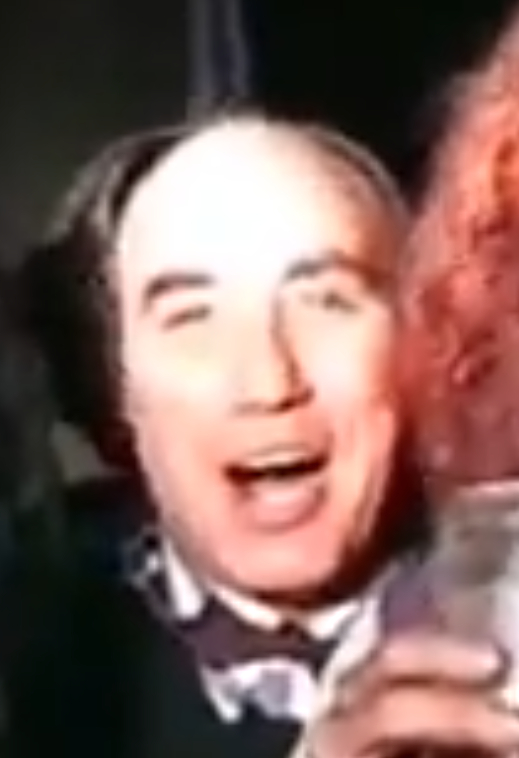
From time to time I was in Dresden or Berlin. In 1994 and 1995, Meir was often in Berlin. In Dresden, he apparently no longer got very far and was looking for new opportunities. He started doing business again, and I often accompanied him. For a while I even worked as his driver in his BMW 525. My knowledge of Berlin was useful to him.
That period was absurd, funny and instructive. I learned a lot from him about Western business practices: clothing, appearance, negotiation, body language, restaurants, bars, cars, the small rituals of business. During the day we were on the move, sometimes because of real estate or shop tenants, sometimes for other projects. In the evenings we sat in bars in East and West Berlin. With Meir it was almost always amusing. You never knew exactly what would happen next.
Once, when we were completely broke, we even won the lottery. Four correct numbers, about 1,000 Deutsche Mark. It suited him. Small disasters and sudden rescues were always close together with Meir.
In August 1996 I went to Georgia. I have lived in Tbilisi ever since. With that step, contact with Meir more or less broke off abruptly.
Only through Facebook did a loose connection emerge again around 2008 or 2009, probably once more through Holger John. Once or twice a year we wrote to each other or spoke by video call. Around 2014 Meir said that he would like to visit me in Georgia, but could not leave Israel because his passport had been taken away.
Later I found a Facebook post from his circle suggesting that Meir Mendelssohn had died on April 18, 2017 and was buried in Galilee. Even this news did not reach me directly, but like a late digital echo.
Meir later caused several scandals that were reported in the press. I do not want to tell those stories here in detail. For me, he remains above all the figure who appeared in Dresden in 1989/90: the businessman, the patron, the adventurer, the man holding court at the breakfast table, the man who constantly reinvented himself — and who, at a decisive moment in my life, made a deal with me that opened the way to Amsterdam.
The Rediscovered Painting
And now this painting has reappeared at an auction in Germany.
Not in my studio, not in a memory, not in an old photograph, but on the phone of a young Georgian curator in Tbilisi. Tsotne Tserava had discovered it because he apparently follows international auctions with keywords such as “Georgia” and “Tbilisi”. The auction house had correctly described me as a German artist, born in Berlin and living in Tbilisi. Someone had done research. Only the title and the year had been misread.
“Meir” became “MÜR”.
1990 became 1980.
But the painting itself was there. Fresh, direct, stronger than I remembered it. The specific colors, the expression, the narrow standing figure — suddenly everything was present again.
It was as if someone had opened a door that had been closed for decades.
Not only Meir reappeared. The young man I had been in Dresden in 1990 also suddenly stood in the room again: twenty-five years old, with an almost completed GDR teacher training degree, a monthly stipend of 190 Deutsche Mark, a place at an art academy in Amsterdam and the urgent wish to finance his own freedom.
The painting reminds me that art sometimes arises from very concrete emergencies. From lack of money. From courage. From a conversation on a café terrace. From a deal that is half naive and half life-changing.
It also reminds me that paintings travel along paths one cannot control. They disappear into apartments, collections, inheritances, cellars, frames, auctions. They are misread, misdated, mistitled. And sometimes, after decades, they return — not as possession, but as memory.
Today, Meir is for me a portrait, but also a time capsule. It shows a man who himself embodied a threshold: between East and West, business and art, generosity and calculation, salon and circus, reality and self-invention.
And without this being immediately visible in the painting, it also shows my own transition: from Dresden to Amsterdam, from a planned professional career into free art, from the East to the West — and later further on to Georgia.
Perhaps it is the only painted portrait of Meir Mendelssohn.
What is certain:
For me, it is one of those paintings to which an entire life is attached.
And now this picture is once again going its own way: Meir will be auctioned by Hargesheimer via Drouot on June 12, 2026, with a starting price of 120.00 EUR.
After I contacted the auction house, the catalogue entry has since been corrected: “MÜR” became Meir (Mendelssohn) again, and 1980 became 1990.
View Auction on Drouot