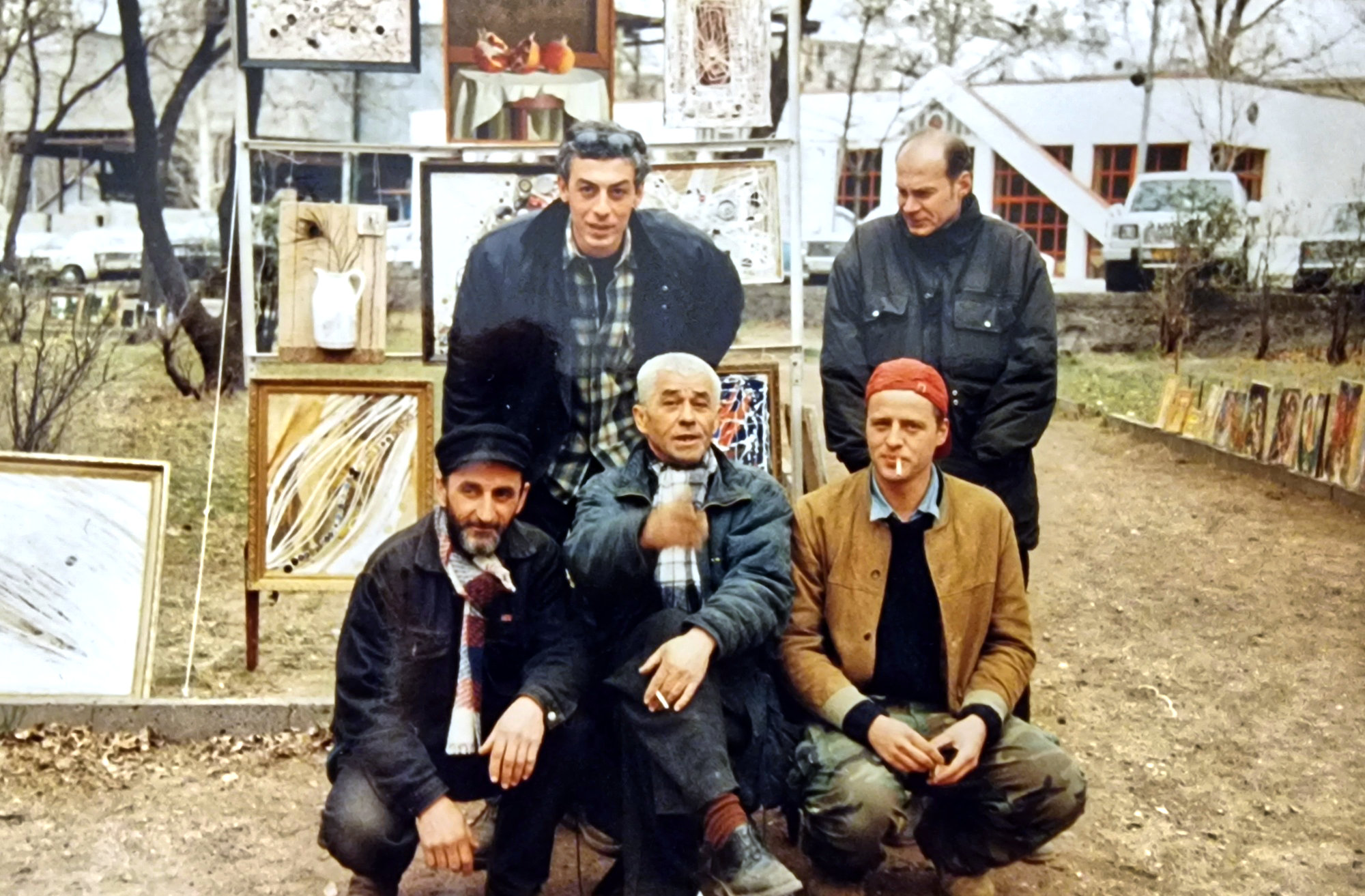

I recently found a few rare photographs in my archive.
They were taken in Tbilisi in 1998, at the open-air art market near the Dry Bridge — a place that, in the difficult years after the collapse of the Soviet Union, became one of the few possible spaces where artists could try to sell their work.
At the end of the 1990s, many artists from Tbilisi and Rustavi were forced to bring their paintings there. Not because it was glamorous, not because it was romantic, but because there were very few other possibilities. The galleries were weak, collectors were rare, and most people had little money.
Every weekend, my friends Malkhaz Datukishvili and Otari Lalishvili were there. Sometimes they sold a painting. And when that happened, a magarich was due — a round for all the artist friends who had been waiting nearby with hungry stomachs and no sales of their own.
A magarich could mean bread, sausage, cheese and vodka. Sometimes there was fish. Sometimes Georgian homemade wine. If a painting sold for 150 dollars, half of that money might disappear immediately into this improvised feast. But nobody complained. Everyone went home slightly drunk, warmed by friendship, and in better spirits than before.
After visiting my friends there many times, and after seeing the improvised artist displays in the park, I suggested to Otar Chkhartishvili that we should also try it once. We could bring some works, hang them outside, and perhaps even sell something.
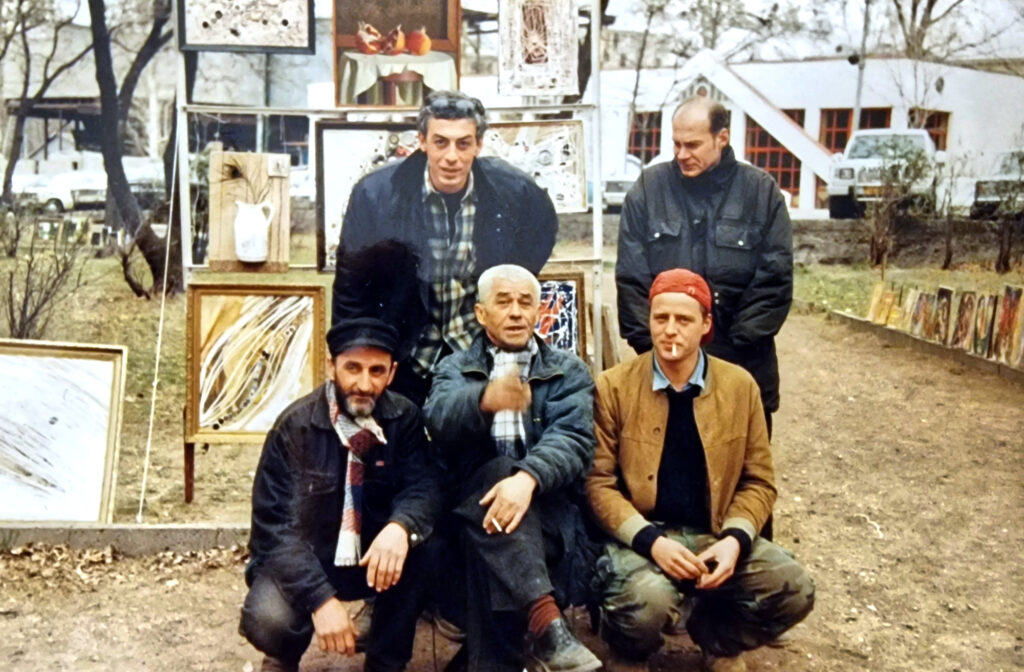
As the photographs show, we really did try it — once.
Otar was enthusiastic. For him, the whole situation immediately evoked the legendary Bulldozer Exhibition in Moscow in 1974, when unofficial Soviet artists attempted to show their works outdoors and were violently dispersed by the authorities. Of course, our little attempt in Tbilisi was not comparable in political force. But for Otar, who had lived through the Soviet period as an independent and nonconformist artist, the gesture of bringing art into public space carried a deep resonance.
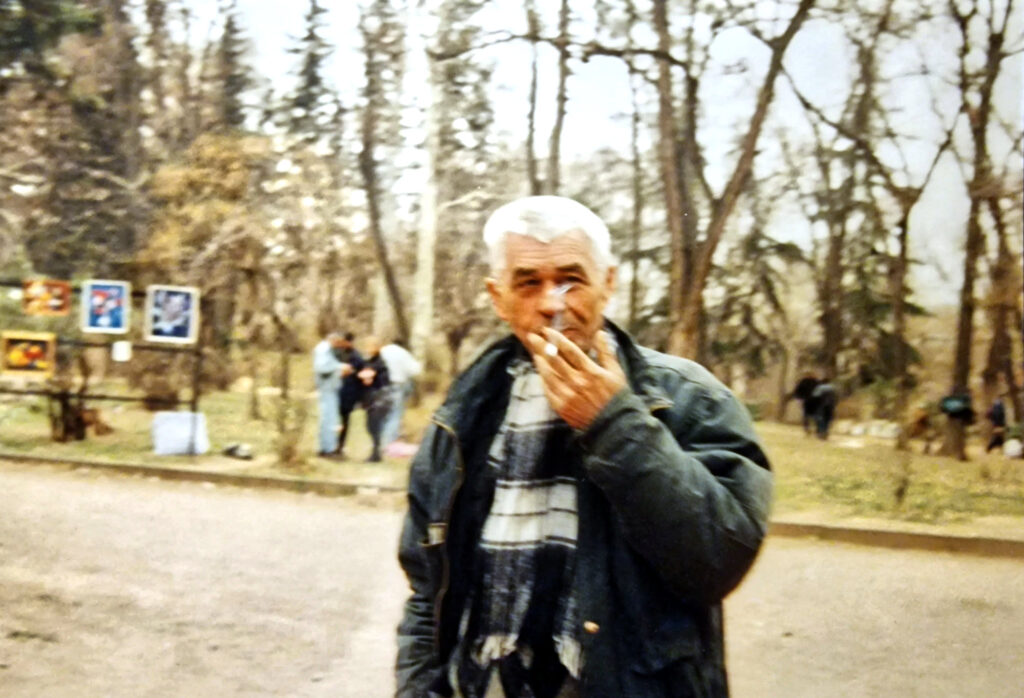
Behind him in these photographs, you can see several of his works. Some of them would probably be valued at 20,000 dollars or more today. But in 1998, they attracted almost no attention at all. Nobody bought anything. None of my three or four paintings sold either.
Murtazi and Mishiko came by to support us. It did not help.
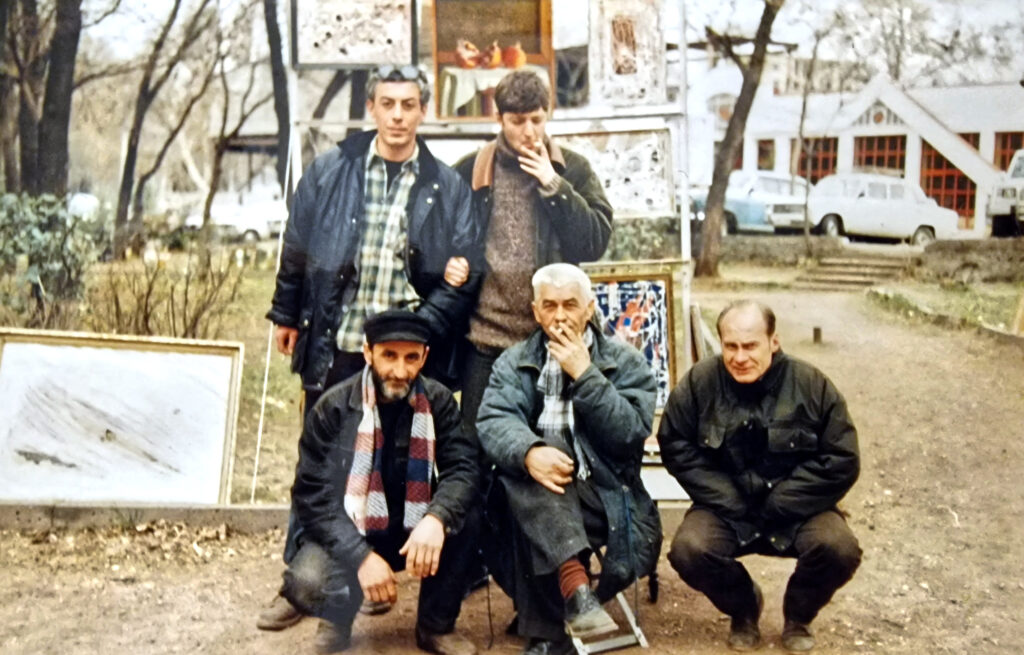
But it was a beautiful attempt.
Looking back now, these images feel less like a failed market day and more like a small document of Tbilisi’s post-Soviet art world: poor, improvised, stubborn, full of friendship — and still alive with belief.
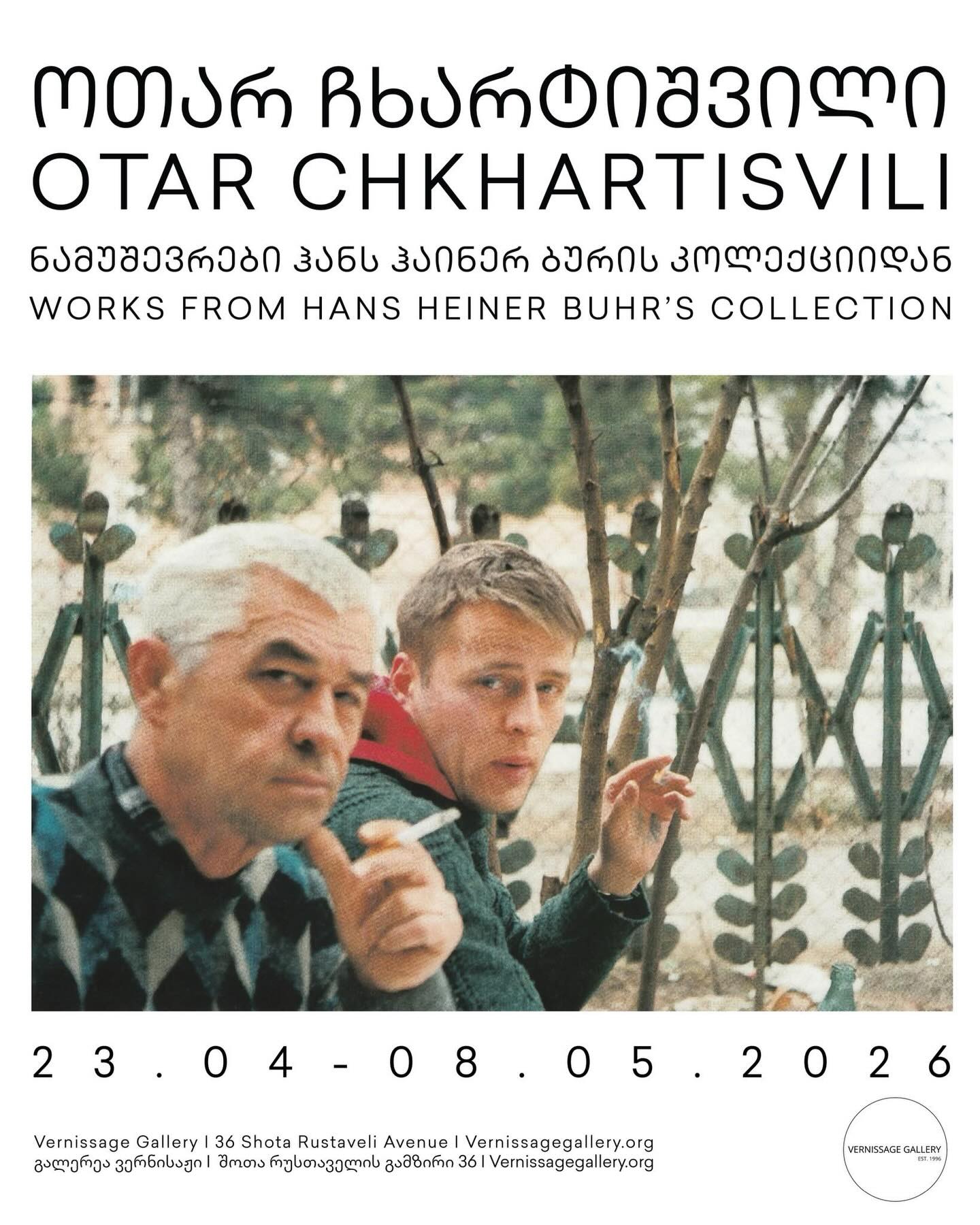
Works by Otar Chkhartishvili from my collection are currently on view at Vernissage Gallery Tbilisi until 8 May 2026.