
In 1992, I was a student at the Gerrit Rietveld Academie in Amsterdam, and one solitary night there I painted one of my strangest works.
At the time, the painting department had been renamed “Autonomous.” Students were free to do almost anything, as long as they could justify their position. It was the era of video, computers, installations, and everything “conceptual,” and painting often felt as if it were considered outdated.
Having grown up in East Germany, in Berlin and Dresden, I came from a more expressionist background and initially struggled with the prevailing spirit at the Rietveld Academie. At the same time, I learned a great deal from conceptual thinking, and my work became clearer and more focused because of it.
In my studio on Cornelis Drebbelstraat, I painted this figure in just a few minutes — the Ukrainian Paratrooper, approx. 200 × 150 cm, oil on canvas.
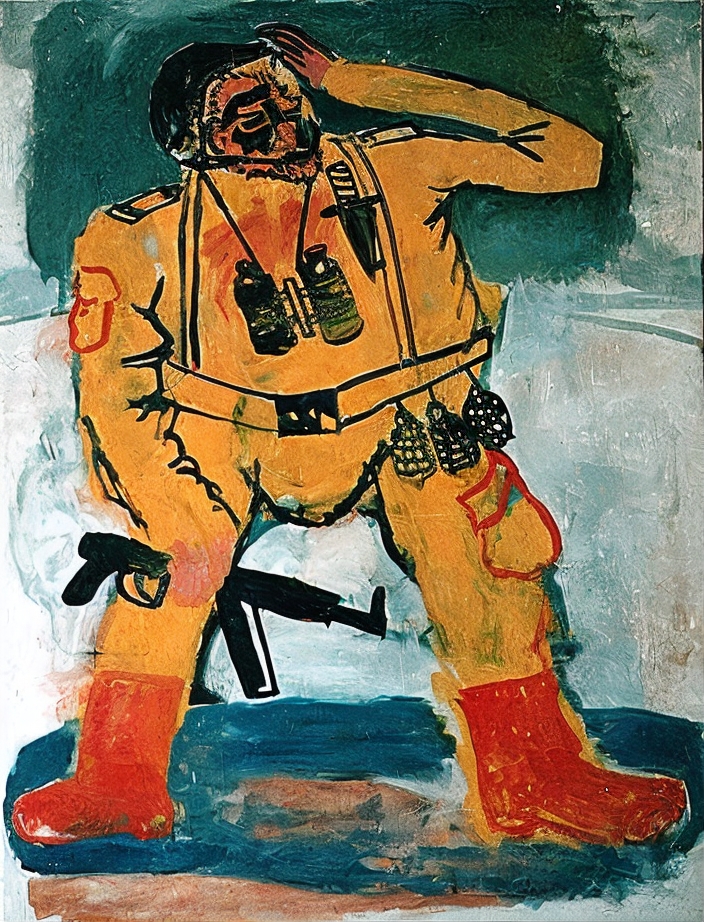
Why is the Ukrainian Paratrooper yellow?
At that time, I was deeply troubled by the war in Abkhazia — a narrow, strikingly beautiful mountainous region on the Black Sea that had declared its contested independence from Georgia. Georgia and most countries did not recognize this independence. A brutal war began.
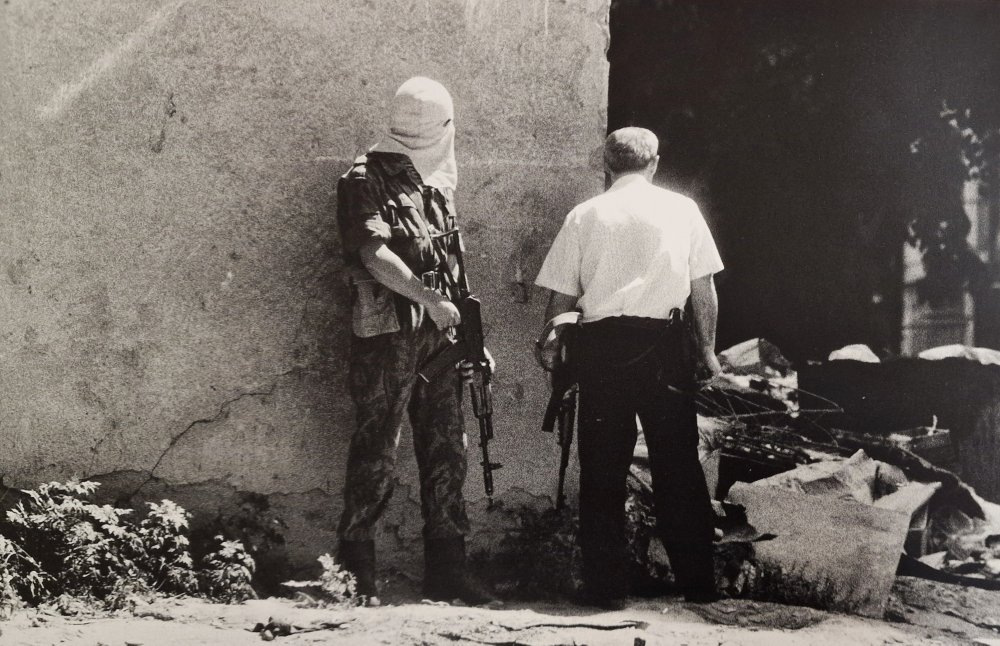
Dutch newspapers reported extensively on the conflict, often with disturbing images and stories. I could not fully grasp the suffering of the people, nor the causes or meaning of the war.
In my mind, the figure was no longer a Soviet soldier, but someone from a new and uncertain time after the collapse of the Soviet Union — more a peacekeeper than a conqueror. At first, it was simply “the UN paratrooper,” later it became “the Ukrainian UN paratrooper.”
Yellow is the color of hope and of the sun. I wished for peace in a time marked by conflicts and unrest.
He is a strong, solid young man from the countryside, descending from the sky — full of youthful force and optimistic energy — falling into a conflict entirely foreign to him, perhaps somewhere in Africa. Soon he will find himself caught between the lines. But he will survive. He is unstoppable.
Can art really change reality and influence our world?
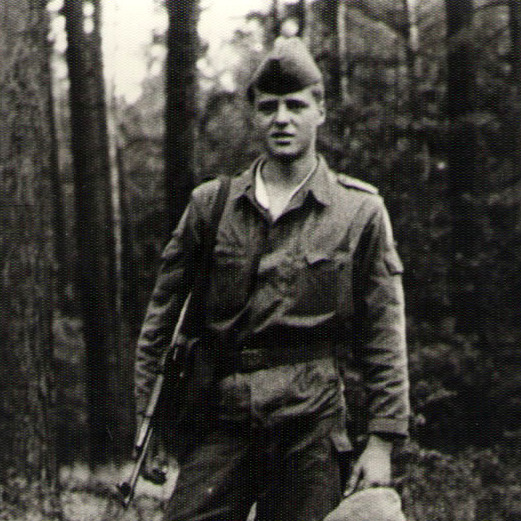
A few years earlier, I myself had been a young and inexperienced soldier in late East Germany. Photography was strictly forbidden, but I still managed to take a few pictures. I had never experienced the horrors of real war — but I have imagined them often, up to this day.
Looking back, my student years from 1991 to 1993 at the Rietveld Academie were among the strongest and most free periods of my work. Much of what I created then came directly from somewhere deeper — instinctive, immediate.
And then, years later, life took an unexpected turn: eight years after that night in Amsterdam, I married my Georgian wife, and since then I have been living in Georgia — with the unresolved conflict between Georgia and Abkhazia as part of my everyday reality.
Update — March 2026
Thirty-four years after painting the Ukrainian Paratrooper in Amsterdam, I now live in Tbilisi — and the conflicts that troubled me in 1992 are still unresolved. Abkhazia remains frozen. And the war in Ukraine, which I may have sensed in some unconscious way that night in Cornelis Drebbelstraat, expressed in yellow paint, is now a harsh and present reality.
For many years, I was known online mainly as “Hans.” In 2026, I brought everything together under my real name: Heiner Buhr — one artist, one presence, one name.
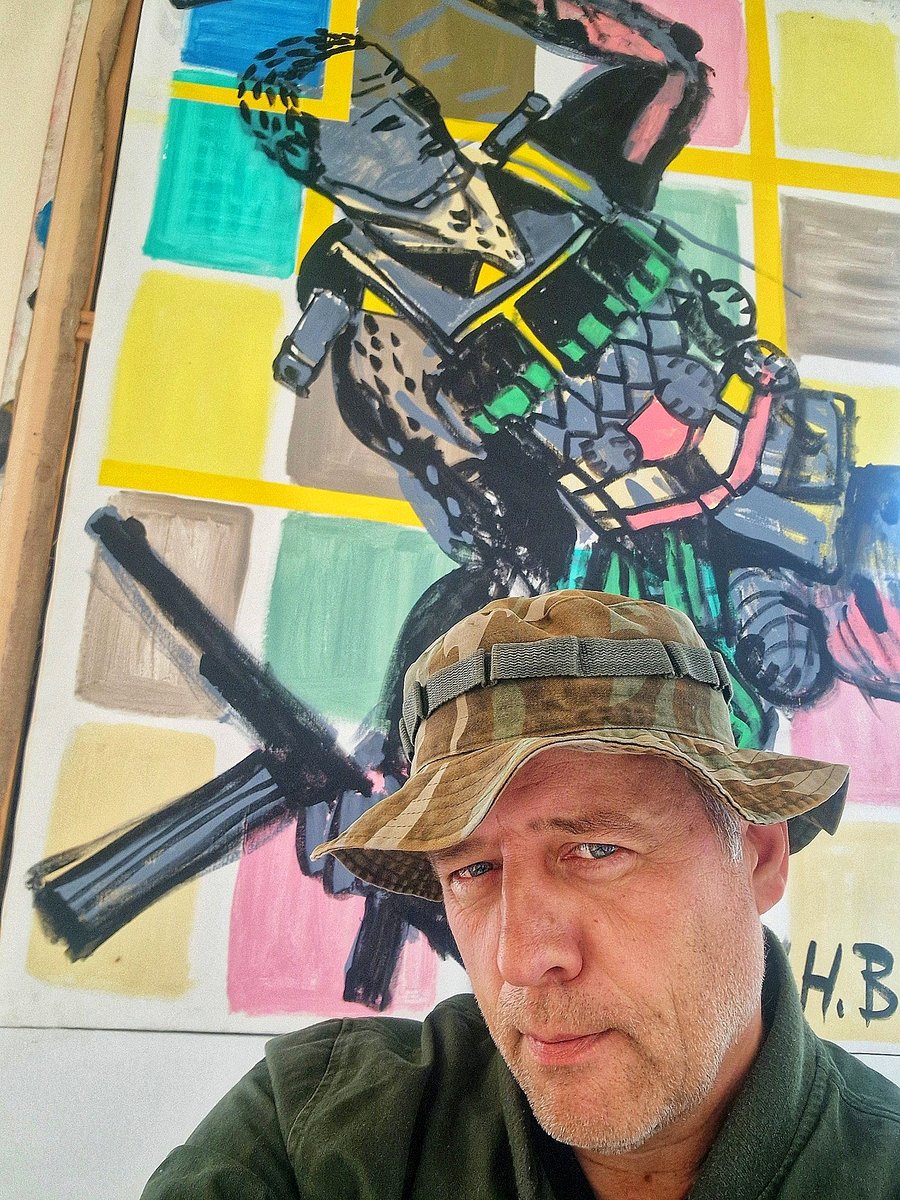
This spring, I am publishing my first major painting catalogue — 28 years of work created in Georgia since 1997. The Ukrainian Paratrooper, still in Berlin, will not be included. The large canvases from Amsterdam and Berlin have not yet made their way to Tbilisi. But they are waiting.
The Ukrainian Paratrooper watches all of this from a wall in Berlin.
Yellow. Unstoppable.
Heiner Buhr — Painter & Crypto Artist, Tbilisi
🌐 Also available in: Deutsch · Nederlands
Newsletter
New paintings. New texts. New places.
Directly to your inbox.