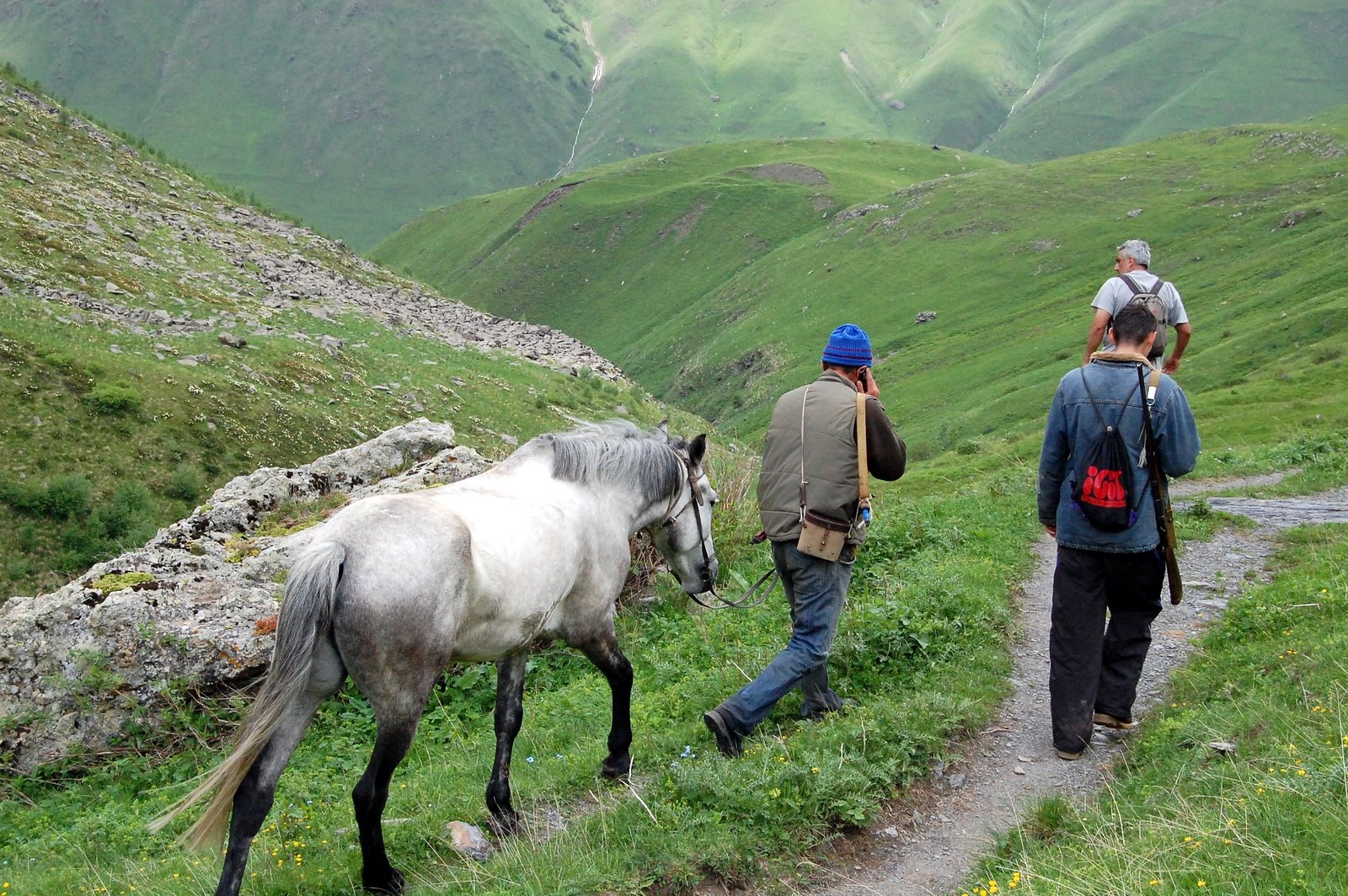

It was the mid-1990s in the Caucasus.
We met him in the snow, somewhere between Georgia and Ingushetia.
In the mid-1990s, after years of war and civil conflict, many remote villages in the Caucasus survived almost entirely on what they could produce themselves: cows, sheep, cheese, butter, herbs, homemade vodka, tobacco.
Everything else had to be obtained through exchange: flour, horseshoes, oil, ammunition — sometimes even a small Korean color television.
These goods were carried across the mountains by traders moving between isolated regions, organizing barter: sheep for fuel, cigarettes for a horse. Their merchandise was known as “kontrabanda” (Russian: контрабанда) — smuggled goods.
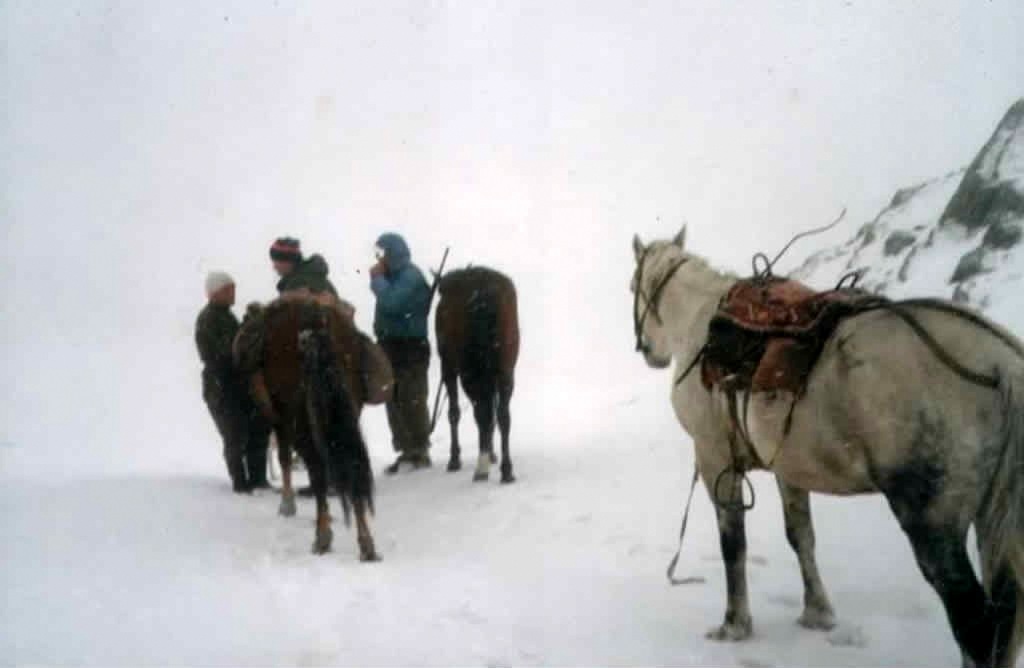
The trade was not necessarily illegal, but it was dangerous. Border guards, corrupt officials, or simple bandits could appear at any moment. Money was taken, flocks driven away — sometimes at gunpoint. The weather, too, was an adversary: blizzards, avalanches, a horse slipping into a ravine — any of it could mean the loss of everything.
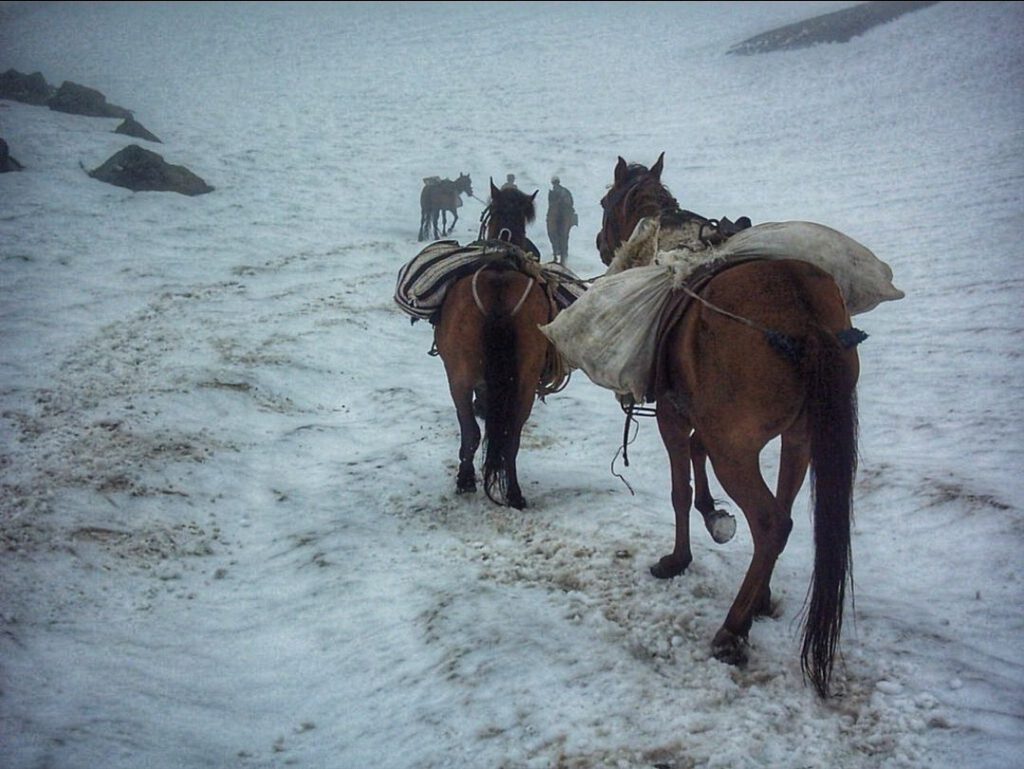
But these traders carried more than goods. They brought news from the outside world: from Tbilisi, Grozny, Yerevan. Newspapers, rumors, jokes — and the latest exchange rates.
They were tough, observant men — resourceful, quick-witted, and able to adapt to constantly shifting conditions. Resourceful. Quick-witted. Able to adapt.
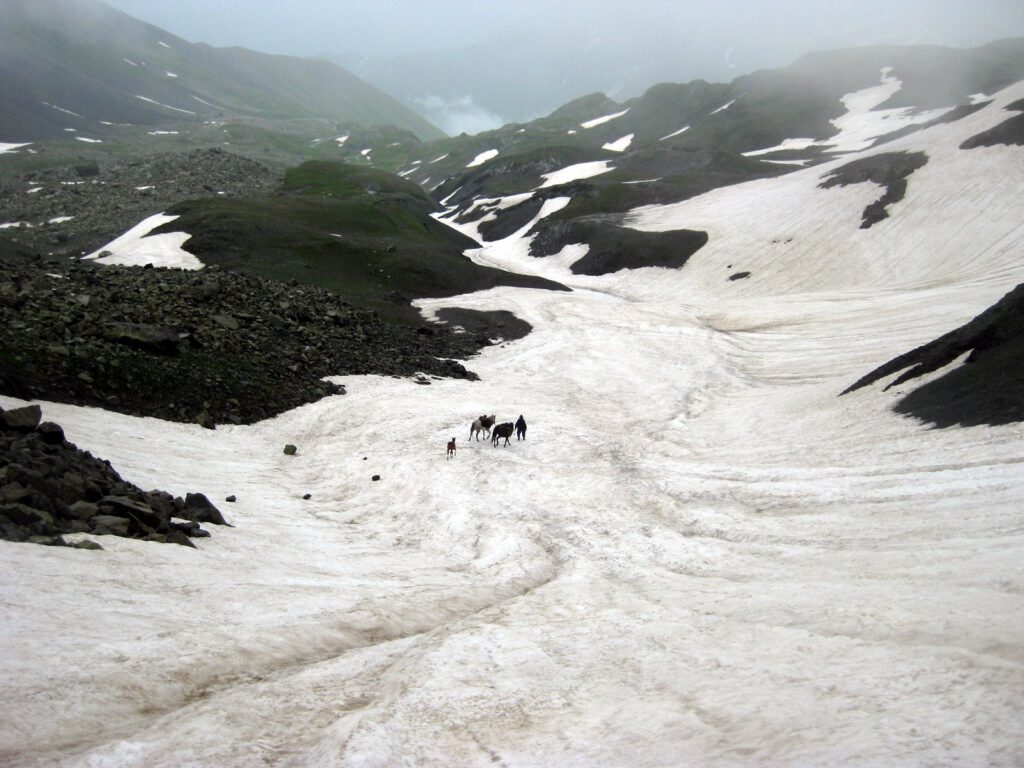
Encounter
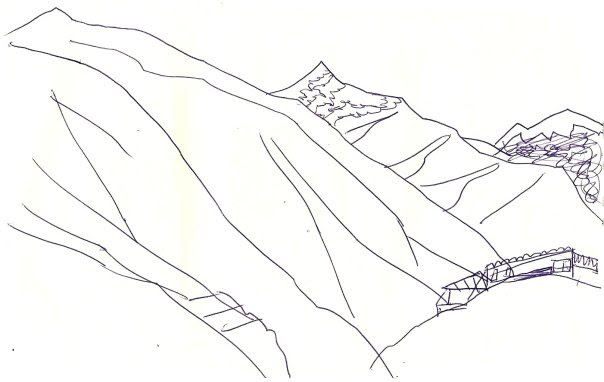
My painting “Kontrabanda” (2024) is based on an encounter with such a trader on the Arkhoti mountain pass.
I remember him as the Ingush man “Mak-Sharif.” In the silent, snow-covered solitude, he seemed quietly glad to meet other people. He invited us to stop. We shared cigarettes. We exchanged jokes.
Years later, when friends from Khevsureti sold me a sturdy red-brown horse, they told me the horse had come from Ingushetia — through Mak-Sharif.
Transformation
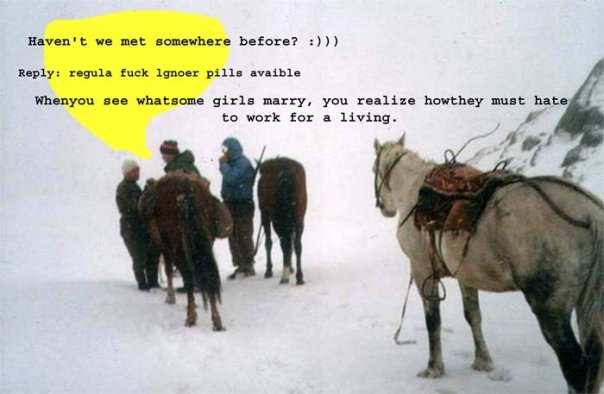
The text in the painting comes from a spam email I once received and kept for its unintended, almost accidental poetry. In the context of the image, it echoes the logic of informal economies: fragmented, coded, and strangely revealing.
Collage
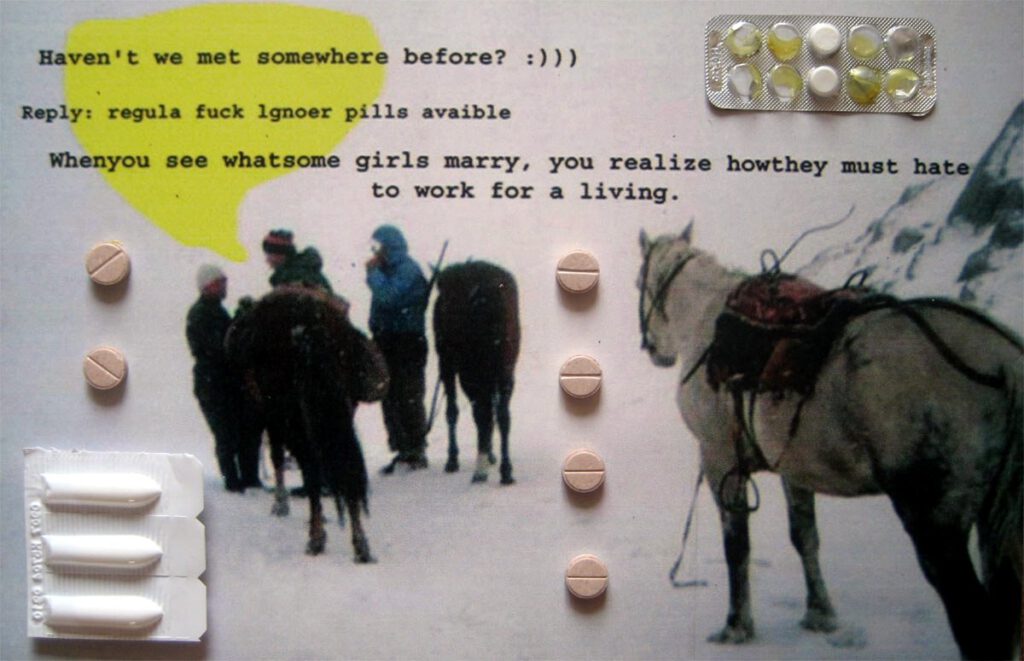
Later, I developed physical collages, incorporating materials such as pharmaceutical elements, adding layers of meaning related to systems, exchange, and the body.
Painting
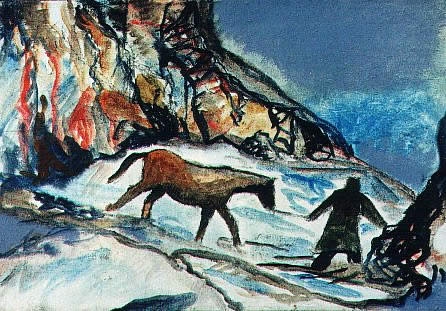
The painting from 2024 condenses these stages into a single image.
It is both a recollection and a transformation — a reduction of narrative into form, gesture, and tension.
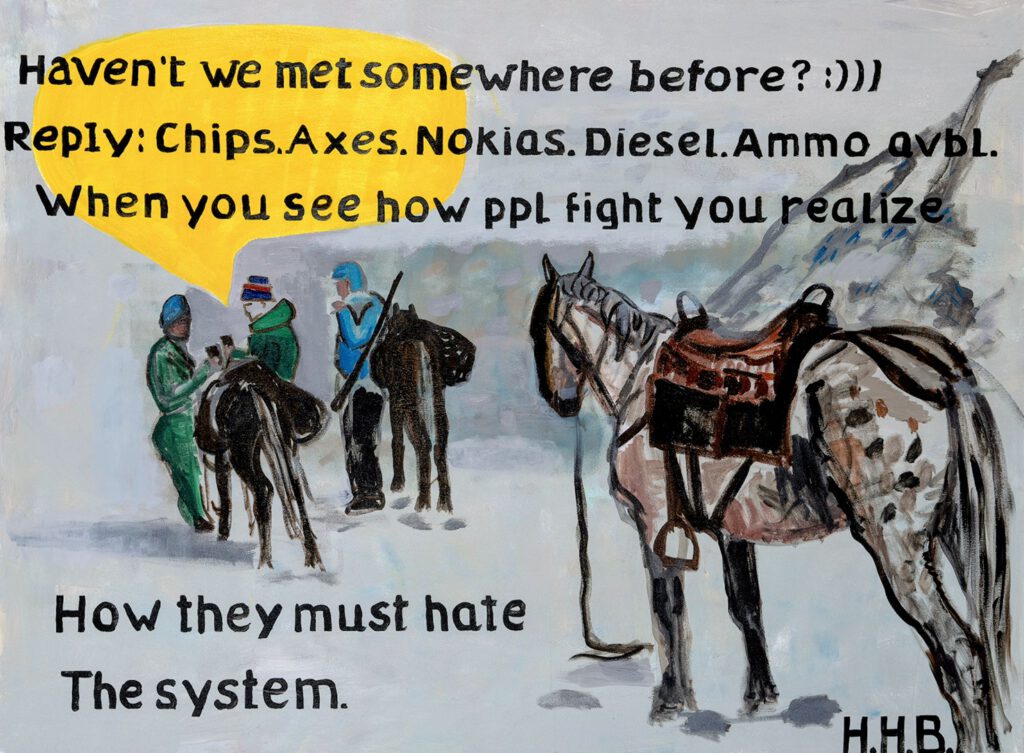
The text in the painting comes from a spam email I once received and kept for its unintended, almost poetic absurdity.
In the context of the image, it echoes the logic of informal economies: fragmented, coded, and strangely revealing.
“Kontrabanda” reflects on exchange — of goods, of stories, of realities — in a landscape shaped by necessity and adaptation.
It is less a depiction than a reconstruction of memory across time.
This work is not only about trade. It is about exchange — of goods, stories, and human presence. About how memory becomes image, and how experience takes form.
This painting is available upon request.
InquireWork
Kontrabanda, 2024
Acrylic on canvas
190 × 130 cm
Vernissage Gallery, Tbilisi
November 1–12, 2024
Part of the exhibition “Heartland”